Welcome to my blog!

Welcome to my blog! This is my journey, my first steps into the world of fictional writing. This blog is an online journal of sorts, where I share the progress of my work as well as what I have learned along the way. I hope you enjoy your time with me and that my experience may be of some use to you.

Monday, May 11, 2015

Show and Tell


Welcome Back!


         In this post, we will be exploring the “Show don’t tell” technique used in storytelling. Before doing so, we need to examine the basic concepts of Showing and Telling individually. Learning the difference between the two, or when to use one rather than the other, is a fundamental necessity for writers, as they are cornerstones of writing.


the five senses


The principle behind Showing is narrating in a detailed fashion. This technique assists the reader to perceive the story through the use of actions, thoughts, senses, and feelings, instead of simply “seeing” it. Showing helps break the pace of the narrative by slowing down the action. By doing so, the author can better control the mood of the story, either creating tension or a sense of relaxation. It also bring awareness to certain aspects of the story by accentuating features with vivid descriptions and focusing the reader's attention on certain key elements. However, too much Showing will bury the reader under an avalanche of details, making the story a chore to read.
 
The principle behind Telling is communicating facts in a straightforward manner. This technique simply informs the audience by stating what one can see on the surface, otherwise known as stating the obvious. By being to the point, Telling has the advantage of being face paced, which comes in handy when the writer wants to give a sense of urgency to the story or simply move things along. The downside is that Telling lacks any sense of depth, making the text feel flat.


The main differences between Showing and Telling are pacing and depth. A story cannot move at a single speed; at some times it requires fast action, but at some point it will need to slow down. The level of detail is also important, but only when we want to help the reader visualize something. If it is not important, then Telling will be appropriate, if it is something essential to the story, then it is worth Showing in detail.


         This brings us to “Show don’t Tell”. The idea behind this technique is to allow the audience to be immersed in the story, giving them a chance to interpret what is going on. By carefully weaving descriptions into the narrative, we let the readers discover parts of the story on their own, adding to their experience, rather than spoon feeding them information. This can be done by helping them visualize elements, being privy to characters thoughts and feelings, or by “feeding” their imagination with other sensations, like smell or sound. As an author, our goal is to find the proper balance when giving readers information, so they can understand the story themselves without boring them with details.


         But how does one Show properly? Showing isn’t just a question of throwing a bunch of random details at the reader, bogging them down with tons of visual references, descriptive information and fancy adjectives. Remember my lesson on Chekhov's Gun? It applies here, in the sense that an author should not give certain details if it does not serve a purpose. There must be a point to Showing. It’s purpose is to emphasize other narrative components, such as Theme, Motivation, Setting, Tone, Motif, etc. It helps bring awareness to what the writer wants you to see but may not be openly saying.


         To better help understand Showing and Telling, I will demonstrate their contrast using examples.


Example #1:


John was running down the street, making his way through the mob.


Our first example is Telling. The information given is pretty basic; who the character is (John), what he is doing (running) and where he is (on a street). Even though the phrase is pretty straightforward, you do get a sense of urgency from this statement. However, in the absence of details, you don’t have an idea of what is truly going on. Furthermore, this phrase by itself feels flat and boring. It’s purpose in a story would mainly be to move the action along.


Example #2:


John was running down the street as fast as his feet would take him, the sound of his heart pounding in his ears as he was desperately making his way through the crazed mob.


This example is Showing. With a few extra details, we give the reader the sense that the character is in fear for his life. By adding “as fast as his feet would take him”, we change the mental image from a man who is running, to that of a man who is fleeing. By adding “the sound of his heart pounding in his ears”, the reader is privy to John’s inner feelings, letting them connect with the character. The word “desperately” emphasizes that he is afraid and the word “crazed” gives the impression the mob is actually out to get him. This example therefore successfully demonstrates how Showing helped accentuate the Tone, Motivation and Setting.


         That is all for this lesson. I hope I managed to shed some light on “Show don’t tell”. I know I will be walking away with a better grasp on this technique and I’m already looking forward to put it into practice.


Until next time.


Cheers,

Patrick Osborne

Monday, May 4, 2015

By the Book: Aliens versus Predator: Hunter's Planet


Welcome back!


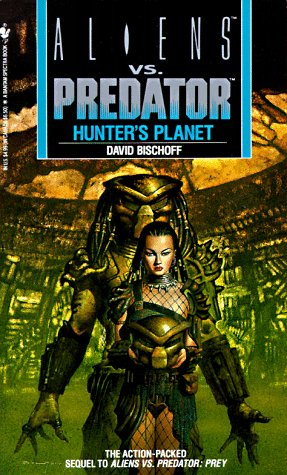
In today’s installment of By the Book, I will be taking a look at “Aliens versus Predator: Hunter’s Planet” by science fiction and television writer, David Bischoff. Having come across this book last month (along with it’s prequel, see my previous book review), I decided to give it another read.


Having experienced the prequel to Hunters Planet is what encouraged me to buy this book. I was looking forward to reading this sequel, having greatly enjoyed Prey. This novel came out in the later half of 90’s, and unlike the first book which I had bought for reading purposes at school, this one I purchased solely for entertainment reasons. The first time I went through this novel was over twenty years ago, so I had completely forgotten what happened in this book, which just meant I got to enjoy it as if I was reading it for the first time.


Taking place a few years after the events that transpired in Prey, we find the familiar character of Machiko Noguchi back in a corporate type position on a mining world. This time around she is accompanied by a companion; her faithful android assistant, Attila the Hun. Later in the story, she is contacted by a rich entrepreneur by the name of Livermore Evanston, who offers Noguchi a business proposal. Evanston owns a small planet named Blior, upon which he is building a futuristic hunting resort. Unfortunately, strange events take place on the planet, leading them to believe the Predators may be involved. Add this to the fact that other strange creatures seem to be appearing, and Machiko finds herself trying to unravel the mystery taking place on this alien world.


Back of the book:


“The best time of Machiko Naguchi's life came in the wake of the Ryushi colony massacre. It was then that she abandoned her human heritage and ran with the Predators as a dedicated Hunter. But it was only two years before she returned to live with humanity and work for the Chigusa Corporation, Livermore Evanston is an ambitious developer who has built the ultimate hunter's paradise: a world just beyond the reach of human regulations, populated by ferociousm genetically engineered animals. But Evanston didn't plan on being patronized by the galaxy's most ruthless Predators--or the Aliens they brought along as prey. As his human customers fall victim to the unsceduled hunt, Evanston realizes that the Predators must be curbed, and there's only one woman for the job. But there's even more to this world than meets the eye, and Machiko Naguchi may only have one way out: to take complete control of the deadliest planet in known space!”


What I learned from this book:
  • Conspiracy Theory: There is a lot going on in this book, not all of which is gone through in detail. However, the writer managed to tie all these things together in a way that paints a bigger picture, giving the idea that Machiko was only a pawn is a bigger game. I found this intriguing since it opened up the possibilities for further stories.
  • Best kept Secrets: The author managed to give the audience a “shocker” right in the first chapter, and managed to keep it secret, not revealing the “MacGuffin” until the last quarter of the story. Without revealing what happens in the book, I can tell you Bischoff superbly drip fed clues in order to keep the audience interested.
  • Tension Building: Bischoff proved to be an expert at building tension. On a few occasions in the book, you know something is going to happen, yet it keeps being pushed off in a way that keeps you on the edge of your seat.
  • Contrast between Authors: Having read both Prey and Hunter’s Planet has made me see just how different authors can see the same material differently. Steven and Stephani Perry had taken the serious yet somber character of Noguchi, and placed her in a horror story. Whereas David Bischoff made Noguchi more witty and sarcastic, which worked better for his mystery type story.


For those interested in reading more books from David Bischoff, please check out his wiki description, containing all of his information: http://en.wikipedia.org/wiki/David_Bischoff


For those interested in learning more about the Aliens versus Predator franchise, you can check out this extensive user mader wiki http://en.wikipedia.org/wiki/Alien_vs._Predator. There you will find details about other books, movies, games and so on.


In closing, I would like to thank everyone for the encouragement and for following my blog. And thank you to my wife Linda for the support.


Until next time!


Cheers,


Patrick Osborne

Friday, May 1, 2015

Current Projects Part 4


Welcome back!


Today is going to be a special “Current Project” post, as it follows my first milestone on the journey to becoming a writer: my first 1000 views on my blog! I managed to reach this goal three months after my blog was established, which by my standards is pretty impressive! I can’t express how much everyone's support has meant to me on this endeavour.


So what have I been up to lately?


Moving on to what I have been doing lately, I am slowly putting together a routine in order to keep a steady pace with my blogging. Along with my (hopefully) bi-weekly posts on writing, I plan on making monthly updates, which will include more of my “By the Book” reviews, “BOOTCAMP” exercises and of course my “Current Projects” updates. Additionally, I have reached out to a few published authors, asking them if they would be willing to be interviewed for my blog. I will keep you guys posted once more information comes in.


This leads me to another goal I have just set for myself: to read more. I have to admit, reading was no longer a priority for me in the past decade. It has only been since I started volunteering for Missing Worlds Media that I picked up the habit again. Well now, I plan on reading more, at least one novel per month.


Next, I am glad to report I have completed the “How to Write a Great Novel” course from screenplayscripts.com. The course not only contained information on important elements of storytelling, but even went as far as explaining the various options available to writers regarding publishing, the importance of marketing and if you should consider getting an agent. This class was great in the sense that it opened my eyes to aspects of writing a book that I hadn’t even considered before (especially the business angle of it). I would recommend this class to anyone seriously thinking about becoming a writer.


Amidst the chaos of my real life responsibilities, my story has managed to see some progress.


Further research has revealed more narrative elements I had not taken into consideration before, so my story checklist (a.k.a. BackBone ) has had more items added to it. The list is still incomplete, but the more I add to it, the more confident I become about this endeavour. I don’t know how to describe it; it feels like my story isn’t just a story anymore, it feels like it has a purpose now. It is gaining a life of it’s own.


As for the story itself, this past week as seen the conceptualization of the Main Villain and two of the supporting/background characters. I’m excited about the Villain, since his profile/details will mesh well with the other two Protagonists (a lesson I have learned through the class I took!). The supporting characters will mainly be puzzle pieces, their presence in the story serving to plug plot holes or hand out information.


On top of that, I have begun using Pinterest to collect various visual references that help me get a mental image of what the characters will look like. This helps me flesh out the characters by “seeing” how they would appear, dress, express themselves or even move. This habit comes from my artistic days of yore, when I gathered visual references from magazines, comic books or other sources to help me better visualize my ideas. For the opportunity to see my references, look for @ozmosis78 on Pinterest.


At this point, a fork in the road has presented itself. While adding details to my plot, I was faced with THE question every writer must come across at some point: What If ? This simple question may appear innocent, but it threw me for a loop. It came to me once my main character reached a turning point in the story, now I am faced with the option of:
A) keep the story as I originally intended, or
B) explore this alternate reality that seems just as interesting and plausible.


Now facing two possible paths, I find myself stuck, having to weigh the pros and cons of each in the hopes of finding the better option. Luckily this is still early enough in the process that it is not a big deal to backtrack and make changes.


Regarding my work with Missing Worlds Media, I am still working on the storyline project for villainous character that was assigned to me, as well as looking into other details of our gaming world. This past week has been a question of mapping out spawn points and character locations.


That is all I have to report for now. I would like to take this opportunity to thank you all again for your continued support and attention. Feel free to ask questions, and I will answer what I can.


Until next time.


Cheers,


Patrick Osborne

(edited 2016-01-07)

Monday, April 20, 2015

Character Motivation!


Welcome back!


Following the game I posted earlier this month regarding motivations, I thought it would be a great idea to make an actual post which will go deeper into what consists of Character Motivation. This is something I have had a lot of practice (and fun) with while creating various Non-Player-Characters for the virtual studio Missing Worlds Media.


Motivation is the reason behind why people act the way they do. It can be a basic need or desire, which pushes the character to adopt a goal-oriented behavior, in order to fulfill or acquire aforementioned aspirations.


Stories are about people, and great stories require believable characters. Motivation helps make the characters plausible by giving them purpose, defining their needs, explaining their actions and making them seem three dimensional. In this sense, we can understand why motivation is an integral part of good storytelling; because it is linked to all the other elements of characterization. When creating motivations for main characters, you must ask yourself the following questions:
  • Is it significant? How important is this to the character and the audience, and how far would the character go to obtain it.
  • Is it credible? How believable is this to the character and the audience, and how much would the character really want/need to obtain it.
  • Is it instinctual? How intuitive is it to the character and the audience, and how would the character feel without it.


We must not forget, characters are also the tools the writer uses to make the plot move forward. Therefore we can see how a character’s personal motives will play a significant part on their role in the story; it explains the “why” and “how” said character will act or make decisions. For example, a character who is incredibly greedy, would not commit an act of generosity out of the kindness of his heart, or a character that is narcissistic would not suddenly commit an act of altruism for no apparent reason. In order for the audience to believe the story, the character's motives must be credible and align with the story’s goal or purpose.


Motivation is rooted in either a basic need or self-fulfilling desire; you do something because you need it, or because you want it. The actions of a character are dictated by their needs and desires. Say there is a cookie on the counter, will your character eat it? If he likes to eat cookies, then yes, because eating something sweet is a self-fulfilling desire. What if the cookie has nuts, then maybe your character will leave it there because he is allergic, therefore meeting his need for taking care of himself (he doesn’t want to be sick). Take this scenario even further; what if your character was allergic to nuts, but on the verge of starvation, he would then eat the cookie regardless, because now it is a question of self preservation.


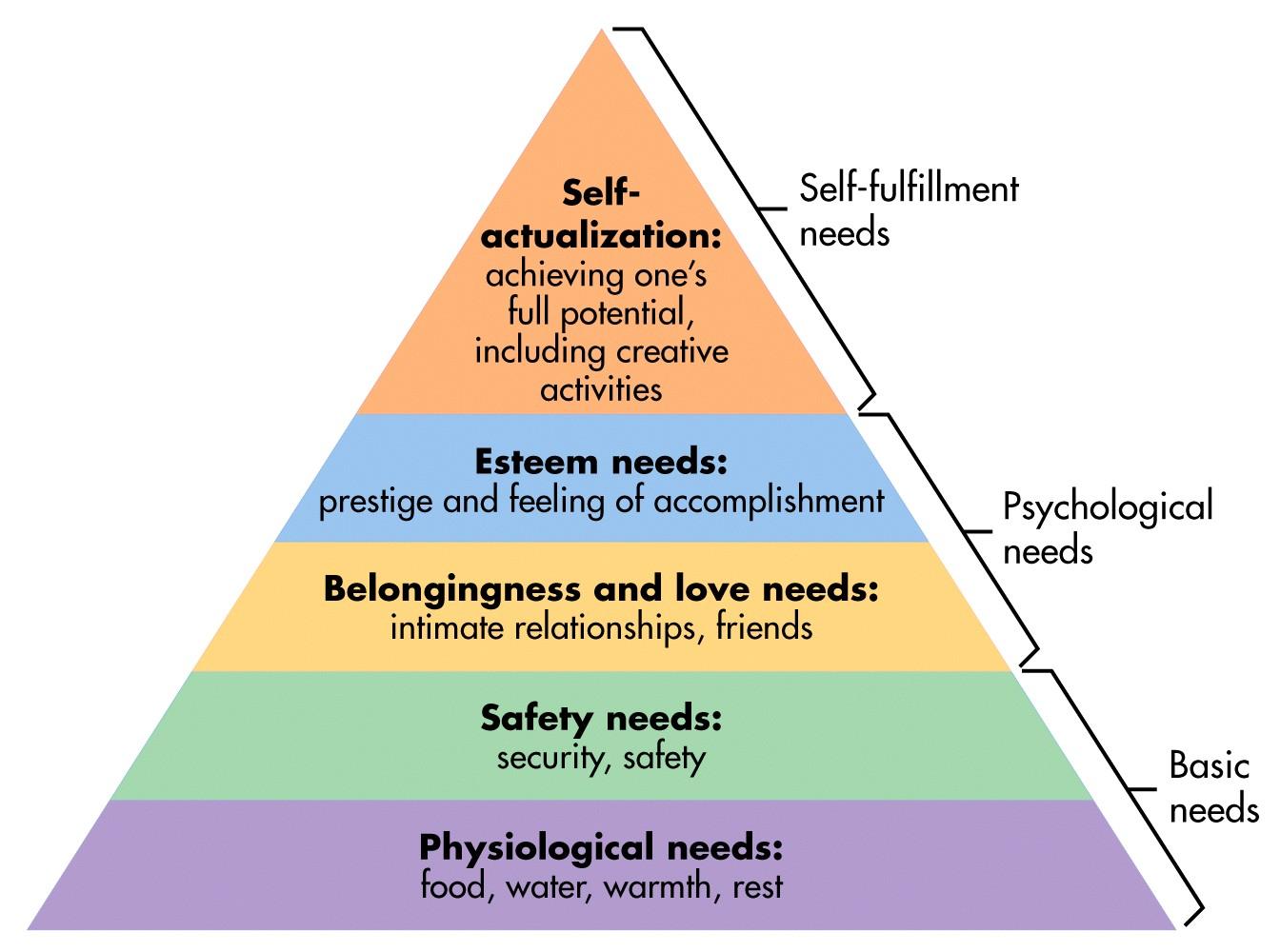
Of course, normally priority would be given to needs, such as breathing or eating, over desires, such as wealth or influence. This is not set in stone however, giving writers the option to play around with their actors motives in order to surprise the audience. For a brief description and a better understanding of what motivates people, see the following graphic.


For further ideas on various motives and how they can influence your character, see the following list of examples:


  • Self-Preservation: the basic need of protecting oneself from harm or death.
  • Revenge: the spiteful desire of inflicting hurt or harm on someone for an injury or wrong suffered at their hands.
  • Relationships: the social need of being connected with others, either by blood or by marriage, and participating in social interaction.
  • Greed: the selfish desire for something, especially wealth, belongings, or power.
  • Fear: the instinctual need to be afraid, mindful of one's surroundings, to want to avoid dangerous, painful, or threatening situations. Often linked to self-preservation.
  • Hate: the inner desire to express one’s intense or passionate dislike.
  • Responsibility: the strong desire to meet up to one’s accountability, to meet up to their surroundings expectations of them.
  • Prestige: the self-fulfilling desire to receive widespread respect and admiration for oneself.


Finally, an important point to remember is a character’s motivation is not static and can evolve over time. The actors motivation is a delicate equilibrium which is built, layer by layer, by the actions, conversations, considerations and discoveries they undergo during the course of a story.


I hope you enjoyed this post and found it was helpful to you in some way. Until next time.


Cheers!

Patrick Osborne

Thursday, April 16, 2015

Writing in Style!


Welcome Back!


        As I mentioned in one of my earlier post, I came across the mention of “Style and Tone” while researching more information for my first novel. In today's post, I will be discussing the purpose of “Style” and it’s various components.

Style is a simple way of saying complicated things. - Jean Cocteau


Style is the technique used by an author when presenting their thoughts, and depends on their choice of words, sounds, logic and structures. It is reflected in the writer’s words, the tone they use, the way they build a sentence or how they describe a visual reference.


Every writer has their own style, as it adds significance and impact to their work. A unique literary style is important, because how a writer expresses themselves can be seen as the voice readers listen to while reading the story.


There are four basic writing styles.


Expository Writing:
This style is subject-oriented, to-the-point and factual. The focus of this type of style is to provide background information, to explain the sequence of events or to tell the readers about a specific subject or topic. It is important to note, Expository Writing is objective. The author leaves out their own opinion about that topic.


Descriptive Writing:

This style focuses on describing various story elements in detail. Descriptive Writing is often poetic in nature, embellishing the topic rather than simply outlining it. This is usually accomplished by creating vivid images using sensory details, therefore allowing the reader to better experience the writer's world.


Persuasive Writing:
As opposed to Expository Writing, Persuasive Writing is heavily subjective. In this style, the writer gives reasons, explanations, examples, statistics and justifications. The authors goal is to persuade and convince the readers, have them believe in their point of view. In order to be effective, Persuasive Writing must appeal to the audience's sense of logic, reason, and emotion.


Narrative Writing:
This type of writing is normally used for fictional stories. Simply put, it is when a narrator retells the events or actions to the audience. Most common forms of Narrative Writing are short stories, novels, novellas, biographies and poetry.


There are various tools authors use to make their writing stand out. The following is a list of literary elements used to identify the type of style a writer is using.


  1. Vocabulary: The author may choose to use words either because they are simple or technical. They may use connotation (the associative or emotional meaning of a word) or denotation (the dictionary meaning of a word).
  2. Word Sound: The author may choose specific words because of their sound. This can be represented through Alliteration (repetition of initials) Consonance (the close repetition of consonant sounds), Assonance (repetition of similar vowel sounds), Dissonance ( the deliberate avoidance of patterns or repeated vowel sounds), Onomatopoeia (when a word sounds like what it represents) or Rhythm (flow or cadence).
  3. Expansive / Economical Diction: The author may decide to write in a tight and efficient manner, using as little words as possible, or choose to elaborate and give long-winded descriptions.
  4. Experimentation in Language: The author purposefully goes against the laws of literature. This can be achieved by unusual layout on the page, breaking rules of grammar and form, odd or unstable narrative perspectives, and so on.
  5. Sentence Structure: The author pays close attention to the form of there sentences. Short sentences best convey suspense, tension, and swift action, whereas Longer sentences work better for slower scenes, when explanations and descriptions are needed.
  6. Paragraph / Chapter Structure: The author pays controls the length of his paragraphs and chapters. Like sentences, the longer they are, the slower the action is. The length of a paragraph or chapter is usually is an indication of importance, as it shows that more information needed to be given to the audience.
  7. Pace: The author controls the speed at which the story flows. Keeping a steady pace requires the information given to the reader remain constant. If the writer wants to add atmosphere or tension, the writing will become heavily descriptive. If the writer wants the focus to be on face paced action, they will give less details to the audience.
  8. Time Sequencing / Chronology: This is how the author organizes the chronological order of events. Does the work’s structural “rhythm” flow continuously from beginning to end, or does the timeline jump, either with flashbacks, flashforwards, skipping large periods, and so on.
  9. Character Development: Style is also apparent in how the author introduces his characters. This can be seen in a variety of ways: through their visual appearance, descriptions of their behavior, what role they play or how they interact.
  10. Point of View: As mentioned in one of my earlier posts, the Point of View dictates how the audience perceives the story. Therefore the author’s choice of PoV has a heavy impact on their style. Possibilities: first, second, third, omniscient, limited omniscient, multiple, inanimate, free indirect discourse.
  11. Use of Dialogue: Dialogue is words spoken in between characters. it affects the style in many way, as it can be used to control pace, express tone, reveal information on character development and so on.
  12. Figures of Speech: The author may use various figures of speech in their narration. Common tools are Metaphor (transferal of an idea associated with one word to another word), Simile ( comparisons using “like” and “as” and occasionally “than”), Symbol (word that operates on two levels of meaning, the literal and the figurative or suggestive), Personification (gives human qualities to inanimate objects, nonhuman organisms, or abstractions), Hyperbole (exaggeration) or Understatement (opposite of hyperbole).
  13. Tone: As mentioned in one of my earlier posts, the tone reflects the mood of the story, therefore affecting the audiences perception. Tone represents the author's attitude towards a specific subject.
  14. Allusions: The author refers to something in our common understanding, our past or our literature. This can be anything from historical references to famous legends or popular books.
  15. Metafictional Techniques: The author specifically points out his own narration in the story, pointing out their use of various literary elements.


When beginning my research on “style in literature”, I had no idea of how many elements and components came into play. I hope this information will prove useful to some of you. This is definitely something which will require further practice on my part, as I feel my current “style” is pretty basic (or even non-existent).


Until next time,


Cheers!

Patrick Osborne


(edited on 2016-04-13)