Welcome to my blog!

Welcome to my blog! This is my journey, my first steps into the world of fictional writing. This blog is an online journal of sorts, where I share the progress of my work as well as what I have learned along the way. I hope you enjoy your time with me and that my experience may be of some use to you.
Showing posts with label Sci-fi. Show all posts

Monday, June 5, 2017

Interview - Druscilla Morgan


Welcome back!

I am very excited about this month's writer interview. She has published material in various genres, and has contributed to several different anthologies (see images below for a few examples). So it is my great pleasure to introduce you, the versatile writer, catt dahman.

Like some of my previous writer showcases, I was lucky to meet Ms. Morgan via the Facebook page called The Better Writer’s Group, and was kind enough to volunteer for my writer interviews.


Blood of Nyx by [Morgan, Druscilla, Booth, Roy C.]
(w/ Roy C. Booth)

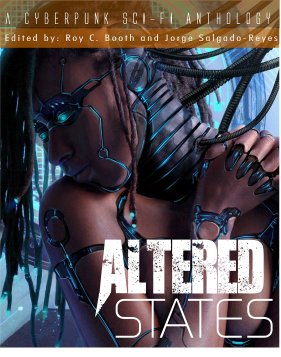
altered states cover
Altered States: a cyberpunk sci-fi anthology
‘The Walk’ – Druscilla Morgan
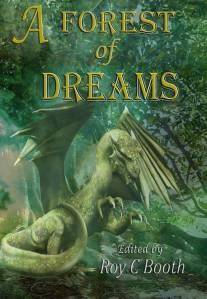
A Forest of Dreams ebook cover
A FOREST OF DREAMS fantasy anthology edited by Roy C Booth
“The Last Unicorn” – Druscilla Morgan


Short Bio: I am a Sydney born writer and artist who loves cats, horses and vampires. I write short stories and novels in the horror, fantasy and science fiction genres. I enjoy weaving a narrative that both entertains and challenges my readers.
My short stories have been published in several anthologies and magazines. My debut novel, BLOOD OF NYX, co-authored with Roy C Booth, was published in 2016 by Indie Authors Press.

Published Works:
  • Blood of Nyx (Horror novel, 2016)
  • The Dragon Whisperer (Into the Mist anthology, 2016)
  • Blood Bond (Corpus Deluxe, Tales of the Undead anthology, 2015)
  • The Flower Seller (Like a Girl Anthology for PLAN, 2015)
  • The Walk (Altered States: A Cyberpunk Sci-fi Anthology, 2014
  • Bella Vista (Tied in Pink: A Romance Anthology Supporting Breast Cancer Research)
  • Raising Rudi (In Shambles: A Scarlett Nightmare II horror anthology, 2014)
  • The Last Unicorn (A Forest of Dreams fantasy anthology, 2014)

Current Projects: I am currently working on a stand-alone horror novel, along with the sequel to BLOOD OF NYX.

Website

When did you begin writing?

My love for writing began in my early school years. I eagerly devoured as many books as I could, immersing myself into worlds that inspired and fed my passion for the written word. However, I did not seriously start writing until four years ago, when I began working on the vampire novel which was to become Blood of Nyx.


Did you receive any special training or attend a school?

No, not particularly, although I did complete an online writing course which was very helpful.
Most of my skills have been gathered through writing websites and groups, along with invaluable input and insight from other writers and mentors, including my co-author Roy C Booth. I cut my writer’s teeth on several short stories which I submitted to anthologies. I can highly recommend this as a pathway into publishing, as there is a steady stream of independent publishers seeking submissions for anthologies and magazines.

Where do you get your inspiration from?

I find inspiration in many, different ways. Often, reading beautifully written prose by other authors can inspire me creatively. I find much of my inspiration for storylines comes from real life. For example, I wrote Raising Rudi after watching a documentary on women who visit Rudolph Valentino’s grave with unswerving love and dedication, year after year.
Human nature is also a source of fascination for me. I studied psychology whilst gaining my qualifications in welfare work, and that interest has always stayed with me, manifesting in my characters as they emerge and claim their place in my imagination.

What is (in your opinion) the most important thing to remember when writing, and why is it so important?

It’s difficult for me to nail down one important thing, but if I were to choose, it would be to learn the craft of writing and keep learning! Learn by reading books you love by authors you admire. Learn by taking a writing course, or participating in a writers’ group or workshop. Writing is so much more than throwing a few words onto paper and, while talent is important, it is rarely enough in itself to produce a skilfully written story.

What is (in your opinion) the most challenging part of writing, and how do you overcome it?

For me, the discipline involved in writing regularly and prolifically is the greatest challenge. I’m a bit of a free spirit when it comes to most things, including sitting my butt down in a chair and writing a story. Writing with another, more experienced writer helped when working on Blood of Nyx. In the end, however, there’s no other way to overcome procrastination than to just sit down and write!       
    
Did you use an agent? (why or why not?)

No, I approached publishers myself, submitting to anthologies initially. Roy saw some of my early writing and asked if I’d be interested in collaborating. I was thrilled and found the experience rewarding. Our publisher, Jorge Salgado-Reyes at Indie Authors Press, is great to work with. I find most independent publishers are happy to give new authors a go if they can see merit in their work. I did try to pitch to agents at one point, but it is a competitive process and not for the faint-hearted.

Did you use an Editor? If not, what process did you use to edit your work?
          
I usually go through around five edits before I think a story is ready to submit. From that point onwards, I work with the publisher and their editor to tweak and polish the finished manuscript.

How did you get your book published? (self-published, Vanity publishing, Mainstream publisher).

All my work has been published through independent publishers and magazines. I have never used Vanity Press.

Do you handle your own marketing?

I do take on much of my own marketing, but it is a shared task with my publisher and my co-author. Most publishers today, including the Big Guys, expect authors to pull their weight with marketing.


What is your best marketing tip?

Build a marketing platform, including a webpage, Facebook page, Twitter account and blog. Network on social sites and most importantly, get reviews for your book. Seriously. Reviews raise your rankings and reviews sell books!

Do you have any advice for other writers?

Again, learn the craft! Accept critiques gracefully and recognize them as an opportunity to further develop your writing skills. Develop a thick skin, you’re going to need it.
If you are planning to self-publish, please, PLEASE get a professional editor before you hit the publish button. No writer has such an unbiased eye that they can pick up every plot-hole, unnecessary adverb or poorly constructed sentence.
Along similar lines, unless you are a graphic artist and know your way around Photoshop, please entrust your cover to a professional cover artist. An amateur cover will not do your novel justice.
Last but certainly not least, admire and be inspired by other authors but find your own, distinctive writing voice.

Some good points have been brought up in this interview, and hopefully everyone found it as helpful and informative as I did. It made me realise just how important it is to get yourself out there, and start networking early.

I would like to give a heartfelt thanks to Druscilla Morgan for taking the time to take this interview. Her participation and insight was truly appreciated.

Until Next time.

Cheers,

            Patrick Osborne

Tuesday, May 23, 2017

Science Fiction

Welcome back!


In honor of Star Wars Day (May the 4th), I thought it would be a good idea to have the theme for this month’s article be about writing Science Fiction. Some people may disagree about this popular franchise being Sci-Fi and think it is more of a fantasy or drama. To be honest, after doing the research I am inclined to agree. Let us explore the details of what makes a story Science Fiction further.


Image result for public domain science fictionImage result for public domain science fiction


The basics of a story is a plotline which follows the exploits of the main characters as they attempt to resolve a conflict while making their way to their intended goal. So how exactly does Sci-Fi differ from other genres? Science Fiction (also referred to as ‘’speculative fiction’’) is just that, fiction about science. At its core, science fiction is about people dealing with situations that are out of the ordinary for the audience. The protagonist will experience encounters or events that focus on scientific discovery and human innovations. Its stories contains elements which are based on modern scientific facts or ideals, but that are expanded to unforeseen or even improbable levels.


While writing science fiction, the goal is to create the worlds and societies of tomorrow by exaggerating the facts of the present day. To explore possibilities and human nature through exposure to subjects, situations or scenarios that are otherwise impossible or unlikely to happen. This can be incredibly tricky, but luckily, there are some simple guidelines to help authors along.


RULE 1: DO SOME RESEARCH
There are as many different types of Sci-Fi as there are scientific fields; political, psychological, social, technological, etc. Details are what sell science fiction, so the more research you do into a selected field, the more confident you will feel and the more ideas will come to you.


It is not necessary to study to a point where you earn a Phd, but it would be helpful to acquire an understanding of scientific elements, a grasp of scientifically established facts and knowledge of how to feed this information to the audience (for more details on how to control the flow of information, see my post showing and telling).


RULE 2: FORM AN IDEA
The basics of creating science fiction stories revolve around addressing a modern day scientific aspect, then asking the ever popular ‘what if..?’. There are two different approaches to this query: prediction or speculation.


Prediction is when fiction is created by extrapolation. By taking what is currently known to science, the author then guesses as to how it will change over time. This can focus on anything from various technologies, to social trends or even climate changes. When trying to predict the evolution of a science, event or practice, look for documentation on a similar situation from the past, as it could help extrapolate results. For example, for writing a story about aliens colonising on earth, maybe read books on how the Europeans colonized America.


Speculation is when an author adds elements based on theories or concepts that have no firm evidence of their probability or their existence. Intelligent alien life, faster than light travel or teleportation are classic examples of speculation in science fiction. Researching for this approach can be tricky, as it requires some level of ingenuity. For example, no clear documentation exists on intelligent alien lifeforms, so for creating an imaginary race from scratch, research other lifeforms that are documented and have uncommon attributes; natural camouflage, regenerative abilities, extra limbs, etc.


Here are a few popular examples for ideas using these approaches:
  • What if artificial intelligence became sentient?
  • What if intelligent alien life landed on earth?
  • What if social media eliminated all need for physical interaction?
  • What if pollution caused an unforeseen global natural disaster?
  • What if dinosaurs still existed?


RULE 3: PUSH
Once you have your central idea, it’s time to ignore the limitations of modern day science and push said idea past any known boundaries, achieving the characteristic feel of Sci-Fi. Imagine how your concept would impact your society and setting, and what changes occur because of them say five, ten, even a hundred years down the road.


The challenge with science fiction, however, is to keep the science plausible, and not push it so far as it becomes unrealistic (even by fiction standards). It is best to keep your ideas clear and straightforward. Of course stories often contain several plots and themes unfolding simultaneously, so try to link most details from the setting or characters back to your central idea, this will help minimize inconsistencies and long winded explanations (also known as the dreaded ‘’infodumps’’).


In closing, the most important thing I learned today, is that science fiction requires the writer to look at things differently, to think outside the box and not to be afraid to push the limits. Research is also very important, as it will make your stories more compelling.


Until next time!


Cheers,


Patrick Osborne

Image result for public domain science fictionImage result for public domain science fictionImage result for public domain science fictionImage result for public domain science fictionImage result for public domain science fictionImage result for public domain science fictionImage result for public domain science fictionImage result for public domain science fiction**All images in this post are considered public domain under the Creative Commons law (CC0)**

Thursday, May 11, 2017

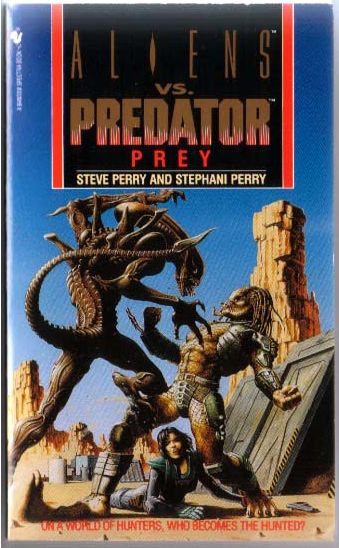
By the Book: Aliens versus Predator: Prey

Welcome to my latest book review!


In my latest installment of By the Book, I will be reviewing “Aliens versus Predator: Prey” by father-daughter team Steven and Stephani Daniel Perry. Having found it during my spring cleaning prompted me to give it another read.


Way before any of the movies came out, “Aliens versus Predator” actually had a short series from BANTAM Books publishing. Being a big fan of both the Alien and the Predator franchises when I was a kid, it comes as no surprise I was drawn to this series. This novel came out in the early 90’s, which is when I originally purchased it as part of my “English as a Second Language” class in high school (french being my first). I’m glad I kept it, as I found it better the second time around.


In this novel, the reader follows the story of two protagonists. Primarily, we see main character, Machiko Noguchi, playing the role of corporate executive assigned to a ranching colony on a planet named Ryushi. Part of the story is also shown from the Predators angle, more notably from the eyes of pack leader Dachande. The Predators come to Ryushi in order to train new recruits, but the discovery of human colonists put a damper on their plans. An unforeseen mishap with the containment of Alien drones adds chaos to the mix, forcing human and Predators to unite in order to survive the chaos.


Back of the book:


“Machiko Noguchi accepted the assignment of supervising the ranching colony on Ryushi as a challenge. Little did she know that not only would she have run the colony, she'd have to defend it with her life!


First the carcass of a spider like alien is discovered. Then a rancher's family is massacred. Finally a creature unlike any ever seen before is brought to the colony medical center, near death. It soon becomes clear that not one but two strains of alien life have landed near the settlement of Prosperity Wells. One kind -- beetle black with shells hard as steel -- have been spawned as the prey in a deadly hunt. The other kind -- upright like humans but infinitely stronger and just as smart -- are the Predators. Between them are the human colonists, unarmed and vulnerable. With the entire colony at risk, Machiko Noguchi must choose between death and survival -- and may find her greatest ally in a Predator ready to kill her…”


What I learned from this book:
  • Varying styles to accentuate PoV: Most of the story’s Point of View jumps back and forth between the human colonists and the Predators. In order to help differentiate the two, the authors have used different styles of narration for each species. Where the humans are more technical in their descriptions and dialogue, the Predators are more primal, using sensory details. I found this technique most interesting.
  • Multiple PoV angles: There is a lot going on in this book. In order to keep track of all that is happening, the story often jumps location between multiples characters, even in the middle of chapters. The authors managed to do this in a way that is not confusing to the reader, which I thought was well done. I am curious to know if this is the result of having more than one author work on the same book.
  • Knowing the Source Material: I have seen all the movies, so I went into this book knowing what usually transpires when these alien species are involved. So when certain events happen (not saying which cause I don’t want to ruin it for those of you who want to read it), I was worried that knowing where this was going to go would ruin the story for me. Well, I am please to say that I was still surprised! The authors have managed to take the source material, and still entertain the audience regardless of anyone’s expectations. In fact, the way the authors used the current Alien/Predator lore, it just added to the tension.


For those interested in reading more books from Steven and Stephani Daniel Perry, please check out the following websites:


For those interested in learning more about the Aliens versus Predator franchise, you can check out this extensive user mader wiki http://en.wikipedia.org/wiki/Alien_vs._Predator. There you will find details about other books, movies, games and so on.


In closing, I would like to thank everyone for the encouragement and for following my blog. And thank you to my wife Linda for the support.


Until next time!


Cheers,


Patrick Osborne


Wednesday, May 10, 2017

By the Book - Star Wars: Red Harvest


Welcome back!


            Keeping in line with this month's science fiction theme, I decided review a book inspired by one of the most popular sci-fi opera’s out there; Star Wars. The novel in question is entitled Red Harvest written by Joe Schreiber. It was meant to be a prequel to his earlier work, Death Troopers, which I will also be reviewing later this year.


            When time came to select a science fiction novel to review, my library found itself lacking. Everything I owned that was sci-fi had either already been reviewed, or given away. So in a hurry I went to Amazon to order some new material for my collection. Of course Star Wars was high on my list of interests, and that's when I came across Death Troopers. I was curious of the idea of crossing zombies with this popular sci-fi franchise. I later selected Red Harvest when I found out it was its prequel.


The story is about leader of a Sith Academy, Darth Scabrous, who is attempting to create a serum that will grant him immortality. He hires a Whiphid bounty hunter named Tulkh to steal a key ingredient he requires; a Murakami orchid. The plant is located in the Jedi Agricultural Corps facility on the planet Marfa. When Tulkh steals the orchid, he finds that he cannot take it without the plant's handler, Padawan Hestizo Trace, or else the plant would die. Tulkh takes them back to the Sith academy, where Scabrous mixes the orchid in a strange device. The machine is hooked up to Sith apprentice who, once injected with the orchid infused serum, dies and comes back as a zombie. This infected student escapes, and quickly spreads ‘’the sickness’’ throughout the academy in a single night. Hestizo and  Tulkh soon finds themselves trapped, trying to escape the planet while fighting off hordes of zombies.


Back of the book:
Unlike those other Jedi sidelined to the Agricultural Corps—young Jedi whose abilities have not proved up to snuff—Hestizo Trace possesses one extraordinary Force talent: a gift with plants. Suddenly her quiet existence among greenhouse and garden specimens is violently destroyed by the arrival of an emissary from Darth Scabrous. For the rare black orchid that she has nurtured and bonded with is the final ingredient in an ancient Sith formula that promises to grant Darth Scabrous his greatest desire.
But at the heart of the formula is a never-before-seen virus that’s worse than fatal—it doesn’t just kill, it transforms. Now the rotting, ravenous dead are rising, driven by a bloodthirsty hunger for all things living—and commanded by a Sith Master with an insatiable lust for power and the ultimate prize: immortality . . . no matter the cost.


The era of the Old Republic is a dark and dangerous time, as Jedi Knights valiantly battle the Sith Lords and their ruthless armies. But the Sith have disturbing plans—and none more so than the fulfillment of Darth Scabrous’s fanatical dream, which is about to become nightmarish reality.


What I Learned From This Book:
  • Crossing genres: The most obvious aspect of this story, is how it crosses two very distinctive genres, Zombies and Star Wars. Each genre are pretty solid on their own, but combining the two is something that has been rarely seen. The author successfully managed to integrate both genres into one epic story. For more information on integration, visit one of my previous writing prompts on the subject.
  • The ‘’I WIN’’ button: While reading this novel, I came across a plot device that kinda irked me; the protagonists power to kill zombies by growing plant spores inside them. The plot device works somewhat like a deus ex machina in the sense that it is similar to an act of God, but is more integral to the story, in the sense that it is an innate power the character has. What bothers me is that the ability is so powerful, that it basically negated the threat of the zombies. It feels as though the author knew this, and had to severely limit access to said ability, which is kinda odd since the ability is innate. This is something to keep in mind for future stories; don’t make your characters overpowered.
  • Survivor rate ratio: This is a term I came up with in an attempt to explain this phenomenon. It is fully expected that in a zombie story, characters will die. However, some will have ‘’screen time’’ before meeting a gruesome fate. The question I faced was; how much time is too little/long given a certain character? I understand that in order to their death meaningful, the audience needs to spend time with the character beforehand. In this story, I felt some were not given enough time to fully reach their storyline potential, while others had too much time. This is something I will need to research more for future stories.


Joe Schreiber is an American novelist best known for his horror and thriller novels. His works include Chasing the Dead, Eat the Dark and No Doors, No Windows. In October 2009, Joe created his first contribution to the Star Wars universe; Death Troopers. Schreiber was born in Michigan (1969), but is currently based in central Pennsylvania, where he works as an MRI technician and lives with his wife and two young children.


For those interested in reading more books from Joe Schreiber, please check out these following websites:


In closing, I would like to thank you all for dropping by and following my blog. Your encouragement is always appreciated. Don’t forget to hit the like/follow buttons!


Until next time!


Cheers,

            Patrick Osborne