Welcome to my blog!

Welcome to my blog! This is my journey, my first steps into the world of fictional writing. This blog is an online journal of sorts, where I share the progress of my work as well as what I have learned along the way. I hope you enjoy your time with me and that my experience may be of some use to you.
Showing posts with label Fiction. Show all posts

Friday, November 10, 2017

BOOTCAMP LESSON 20: Cross-Genre


Welcome back!


This latest edition of Bootcamp will be an exercise in Cross-Genre, the mixing of multiple literary genres into one story, and how it can be applied to your work. The purpose of this writing prompt is to help us experiment with different genre combinations, and how those pairings can affect a story’s setting and characters.

Related imageRelated imageRelated imageRelated imageRelated imageImage result for cross road signs

Lesson 20: Crossing literary genres


The basics of a story is a plotline which follows the exploits of the main characters as they attempt to resolve a conflict while making their way to their intended goal. A genre is a label that characterizes artistic composition of a literary work by analyzing different elements like form, style, or subject matter.


As opposed to the conservatism of most single genre fiction, cross-genre writing offers opportunities for different approaches to telling a story, which can be both fun and a challenge. In the following exercise, you will have to create a synopsis of a story that has two different genres.


So, here are today's guidelines!


  • Below is a list of seven literary genres, pick two to work with.
  • Following the basics of a storyline, create a short summary which must include;
    • A protagonist
    • A sidekick
    • An antagonist
    • An obstacle
    • A goal
  • Demonstrate how your story is inspired from the two different genres you had selected.
  • The summary must be five hundred words or less.


Genres
  1. Action & Adventure: Story where a protagonist is placed in a desperate situation while facing seemingly insurmountable odds while trying to accomplish a specific goal.
  2. Comedy: Story where the events are told in a funny or comical manner. Comedy is versatile and can easily be merged with other genres.
  3. Fantasy: Story based on magic or supernatural elements, relating to outworldly characters and settings. Good examples would be Fairy Tales, Fables and Legends.
  4. Historical: Story which focuses on a real person or event. Often used in non fictional literature like biographies.
  5. Horror / Thriller: Story where harm and misfortune risk affecting the protagonist(s), told to deliberately evoke a feeling of dread and fear, through suspense, violence or shock.  The protagonist is often pitted against an unbeatable force;  common examples are ghosts, monsters or a merciless psychopath.
  6. Romance: Story involving a character's relationships or love interest. This genre is commonly seen combined with other genres.
  7. Science fiction: Story based on the impacts of actual, imagined or potential science (be it realistic or not). Common elements are futuristic settings or alien beings. Most notable space themed storylines are those set in the Star Trek and Star Wars universes.


For those who aren’t afraid to share their entries, feel free to submit your backstories as a reply to this post. Remember, this is a game, so no posting bad comments about other people's entries.


Now go! Create! And I hope you have fun giving this exercise a try.


Until next time!


Cheers,


Patrick Osborne

Tuesday, September 19, 2017

By the Book - Hammer and Axe


Welcome back,


This month’s book review is very special to me, as it will be about the very first english novel I ever read. In this installment of By the Book, I will be reviewing “Hammer and Axe” from the Dragonlance collection, written by Bestselling Author, Dan Parkinson.


I originally purchased this novel when came out in the early 90’s as part of my “English as a Second Language” class in high school. Being a fan of Fantasy Fiction, the large majority of the books I purchased were of Knights, Wizards and Dragons. Dwarves are among my favorite characters in Fantasy Fiction, so when I saw a novel that focused on their lifestyle, I was intrigued. Regardless of having read this book nearly twenty-five years ago, I was surprised to see just how much I remembered from this story. This strikes me as an important fact, that a story has visuals that are so strong, they stay with the reader for a long time (more on that later).


This work of fiction takes place in Thorbardin, a part of the world of Ergoth governed by Dwarves. When a group of wizards are found trespassing on their land in the hopes of building a magical tower, the dwarves are forced to react. To make matters worse, the wizards inadvertently awaken an ge old beast that was slumbering deep underneath the mountains. Along the way, we get to see how the Dwarven society works, their politics with surrounding human towns, their lineage and what makes differentiates them from other species.


Hammer and Axe (The Dwarven Nations) by [Parkinson, Dan]


Back of the Book:
As the hill dwarves mix successfully with the outside world, they find that enemies lie both within and without, disrupting the fragile political balance and drawing the clans into the territorial wars between the humans and elves.


The humans of Ergoth continue to encroach upon Thorbardin, but the worst threat to the dwarven fortress comes from a mysterious fog-beast and a covetous wizard. A Cobar, a kender, and a giant raptor add to the confusion as the dwarves are faced with wizards who command not only the forces of magic but thousands of mercenaries as well. And, unknown to the dwarves who valiantly fight the invaders, the beast has already claimed Thorbardin as it's own.


What I learned
  • Dwarf lifestyle: The author went into incredible detail about Dwarves and what makes them different  from other races. The story does an incredible job of showcasing their society, ideology and history. Parkinson successfully demonstrates that dwarves aren’t just short people, they are as much a fantasy being than elves or hobbits. A particular trait I found amusing, is the dwarfs ability to resist magic out of sheer stubbornness. It makes for a few good laughs in the story.
  • Strong visuals: There are a few moments in the story where the author creates a strong visual to help emphasize some of the themes. This not only helps the reader grasp the story, but it cements the story in the reader's mind. My favorite example is the scene which happens to be depicted on the cover. Two dwarves get into an argument over which is the better weapon; the hammer of the axe. The two go into a friendly battle to prove their point. The argument, which was spent exchanging blows for a full day and night, ended in a draw. This scene helps show the reader just how stubborn and resilient dwarves are.
  • Rules of magic: Like I mentioned in my previous article about using magic as a plot device, it is important to establish clear rules on how it works, and to stay true to them. The author succeeds in demonstrating how his rules for magic work, by showing how the dwarves react to magic. By remaining constant in his descriptions, Parkinson helps keep the reader's sense of immersion,


The late Daniel Edward Parkinson (March 19, 1935 – May 10, 2001),  known as Dan Parkinson, was an American author who authored over 40 books, including bestsellers in four different categories; naval fiction, westerns, science fiction and fantasy.


For those interested in reading more books from Dan Parkinson, please check out these following websites:


Furthermore, if anyone is interested in reading more books from the Dragonlance collection, please go to their website here:


In closing, I would like to thank you all for dropping by and following my blog. Your encouragement is always appreciated. Don’t forget to hit the like/follow buttons!


Until next time!


Cheers,


Patrick Osborne

Monday, August 14, 2017

Inspiration part 21 - Cattle Farm

Welcome back,


While looking through my old files, I found several unused photos from my urban explorations. Given I have no overall theme this month, it is the opportune moment to showcase this material.


This article will feature an abandoned cattle farm. This location has closed for a long time. Since then the land was sold and now has houses built on it. However, the original barn is still present, so I took the opportunity to investigate the area.


**Please note, that abandoned locations are dangerous and one should not travel there without permission or supervision. These photos were taken from a safe distance.**


A cattle farm is a workplace normally consisting of a large tract of land along with facilities needed to raise livestock (especially cattle). In this case, the main barn was still present, along with enclosures where cattle were kept and herded onto vehicles. Since I could not enter the building for safety reasons, the article will focus mainly on two parts of the building; the barn itself and the enclosure.


           First, let us take a look at the enclosure. It is mainly composed of wooden fencing, meant to contain cattle within a desired location, and to navigate them to a ramp for loading them onto a vehicle. We can also see a few feeders, where the farm hands would place food for the cattle. In this instance, the fence has not undergone maintenance in years, so you can see it falling apart in some locations.


IMG_2370[1].JPG

IMG_2372[1].JPG


IMG_2373[1].JPG

IMG_2374[1].JPG


IMG_2375[1].JPG


IMG_2376[1].JPG


IMG_2377[1].JPG


           Then we have the barn. The building has tin roofing and metal siding which, though they have lost their color over time, are not rusted. The entire structure is supported by a system of wooden beams, which has started to mold. There is a wooden staircase on the side of the barn which leads to the upper level, and is now completely overtaken by plants.

IMG_2378[1].JPG


IMG_2379[1].JPG

IMG_2382[1].JPG

IMG_2383[1].JPG

IMG_2384[1].JPG


IMG_2385[1].JPG

IMG_2386[1].JPG


IMG_2371[1].JPG


           A structure of this nature could serve as inspiration for a few different story types. Could be part of the setting in a western, or maybe in a romance between a ranch hand and the farmer's daughter. Maybe a murder/mystery story can use this location as the dumping ground of a crazed serial killer. Perhaps a comedy about a protagonist learning to be a rodeo clown. We could even use this location in a horror story, much like Hershel’s farm from the Walking Dead series.


Hope you enjoyed today’s exploration. I had a great time, and maybe these images will come in handy for your next story. Until then, get out there and get inspired!


Cheers!


Patrick Osborne

Monday, August 7, 2017

Interview - Robert Enders

Welcome back,


           For this month's interview, we have the pleasure of meeting published author, Robert Enders. Robert and I met on one of the many Facebook writing pages after I posted that I was looking for published writers to interview. Like so many other authors, he finds time to balance writing with a full time day job. We both worked in private security, so I found his idea on writing a story about security guards interesting.


           So on to the interview!


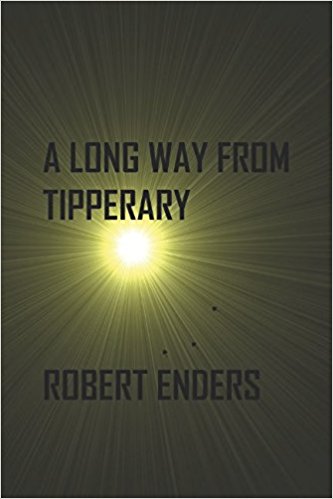
Image result for Robert Enders book


Short Bio: I have worked in private security since before 9/11. I have put out fires and sent bad people to jail. But more importantly, I have prevented fires from starting and deterred people from illegal activity. When private security is done right, nothing exciting happens. When exciting things do happen, my employer won't allow me to talk about them. Sometimes I write opinion pieces for thelibertyconservative.com , a political website.


Published works: A Long Way From Tipperary (novel), Over the River And Back Through Time (short story included in Novopulp Anthology II).


Current Project: I'm working on a novel about security guards. It's NOT autobiographical. It's meant to be funny. I keep hearing "Write what you know" and private security is what I know.


When did you begin writing?


I've given storytelling various levels of effort since elementary school. I wrote my first story intended for publication in 2005.


Did you receive any special training or attend a school?


I attended public school. I have a BA in political science from Indiana University.


Where do you get your inspiration from?


During quiet days and nights at work when nothing is happening, I imagine bad things happening to my characters.


Do you use any special resources when writing? (other books, computer programs, etc)


I use Scrivener and Write or Die on my computer.


What is (in your opinion) the most important thing to remember when writing, and why is it so important?


Remember that fiction is entertainment. Give the reader a reason to read your story instead of watching Netflix.


What is (in your opinion) the most challenging part of writing, and how do you overcome it?


Staying focused on one story until it's finished. I have a lot of ideas, but I can only follow through on a few of them.


Did you use an agent? (why or why not?)


I did query agents to represent my novel, but none of them took me up on it. Agents tend to look for something that they can find a publisher for. Often that happens to be anything similar to recent bestsellers and movies. I am open to working with an agent in the future though.


Did you use an Editor? If not, what process did you use to edit your work?


I did work with an editor. She had me print it out and put it in a 3 ring binder. I also put my novel on my Nook, and read it as if it were a e-book. The story will look different on paper or on a tablet than on a computer monitor, so you'll catch mistakes that you didn't catch when you were writing.


How did you get your book published? (self-published, Vanity publishing, Mainstream publisher).


I self-published it through Kindle Direct Press.


Do you handle your own marketing?


Yes. I wish I didn't have to. I would rather be writing books than selling them.


What is your best marketing tip?


Make sure you have a product that people might want first, then use any opportunity to talk about it. Don't let it be the only thing you talk about, or you can expect to be unfriended on Facebook.


Do you have any advice for other writers?


Keep your expectations modest. Don't treat this as a way to get rich quick. You can write whatever you want to write. But if you are looking to get paid, you are going to have to do a lot of research and work very hard. And even after all that, you might make only $50 on a story that you spent months on. It's not a waste of time if you enjoy doing it, but don't expect it to pay all the bills either. Also, try not to be a jerk because you never know who you will need help from in the future.


Hopefully everyone found this interview as informative as I did. I would like to thank Robert Enders for taking the time to take this interview. Your knowledge, experience and participation was very much appreciated.


Until Next time.


Cheers,


Patrick Osborne

Friday, July 28, 2017

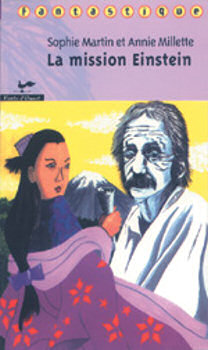
By the Book - La Mission Einstein


Welcome back!


This book review will mark another milestone for this blog; my first review of a french novel. It is a short story compilation created by two different writers, one of which I have the pleasure of knowing today.


I came across this book after meeting one of its authors, Sophie Martin. This publication was part of a writing competition, where the winners had their stories published. Miss Martin was only a teenager at the time she wrote these stories, so they are not as polished as her present day work. It was a great opportunity to experience first hand the progress she has made since then.


***(POSSIBLE SPOILER ALERT BEYOND THIS POINT)***
The four stories covered in this compilation are about youth and facing life challenges in different forms. The first is a girl coming to terms with the death of a family member, and what she would do if she met the killer. The second is a boy who discovers he is actually a descendant from a long line of vampires, and how he deals with the burdens of this new lifestyle. Then is the story of a young inuit brave who goes on a quest to save his dying mother. Finally, we have the time traveling squire, who leaves his native medieval village to travel to Europe during the second world war.

Image result for einstein sophie martin


Back of the book: (Translated from original)
Changing the fate of humanity by meeting Albert Einstein, boarding the same school bus as an authentic vampire, trying to save his mother from the clutches of death and plunging into the future ... from the 15th century, now that is out of the ordinary. These unusual stories were conceived by two teenage girls who won the "Vents d'Ouest" Youth’s Literature Award. Candid freshness, the talent and imagination of Sophie Martin and Annie Millette abound in complete freedom. Their stories are of those that one dreams to believe, even if the unthinkable, on occasion, rubs off troubling historical facts.

Back of the book: (Original French)
Changer le sort de l'humanité en fréquentant Albert Einstein, monter à bord du même autobus scolaire qu'un authentique vampire, tenter d'extirper sa mère des griffes de la mort et plonger dans le futur... du XVe siècle, voilà qui sort de l'ordinaire. Ces nouvelles insolites ont été imaginées par deux adolescentes lauréates du « Prix littéraire jeunesse Vents d'Ouest ». D'une fraîcheur candide, le talent et l'imagination de Sophie Martin et d'Annie Millette foisonnent en toute liberté. Leurs histoires sont de celles que l'on rêve de croire, même si l'impensable côtoie, à l'occasion, des faits historiques troublants.

What I learned from this book
  • Flow: Because french and english sound so differently, it has a veritable impact on how the story flows. I found that french sounded slightly more poetic in their descriptions, while english feels more appropriate when dealing with action scenes. Of course this may just be the style of the authors, so it will require more study.
  • Experience: The book was originally written by teens, which was somewhat apparent in the story telling. The way the plots unfolded, and how ideas were conveyed showed a certain lack of experience compared to the present day work of the author.  

This was the only published book I could find from Miss Martin and Miss Millette, furthermore their book was not widely published. The only reference I could find of it online is at this address:


However, you can find more of Sophie Martin’s work on the website of the creative writing group she is a member of. Those interested in learning more can find them here:


In closing, I would like to thank my readers for the encouragement they have shown me. And a special mention to Sophie Martin for giving me an inside look at her writing process.

Until next time!

Cheers,

Patrick Osborne