Welcome to my blog!

Welcome to my blog! This is my journey, my first steps into the world of fictional writing. This blog is an online journal of sorts, where I share the progress of my work as well as what I have learned along the way. I hope you enjoy your time with me and that my experience may be of some use to you.

Friday, June 3, 2016

Current Projects 17


Welcome back!


          This past month has been awesome! Filled with new experiences, challenges, and new friends. Though I did not manage to stick to all of my plans, I feel that what I did get done opened so many more doors for me. So let’s get right to it.


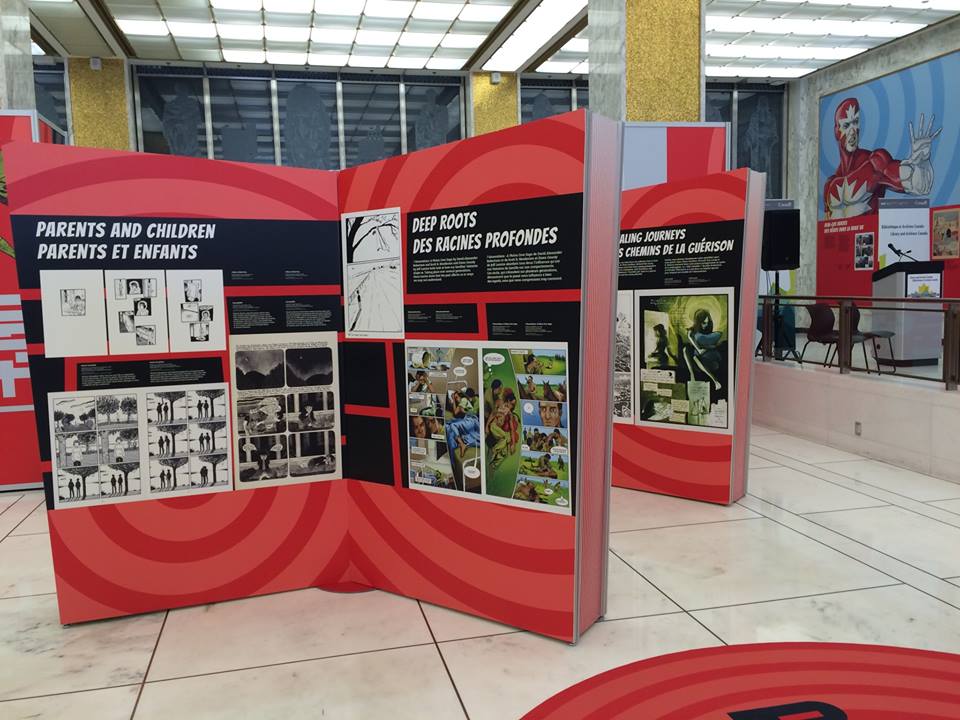
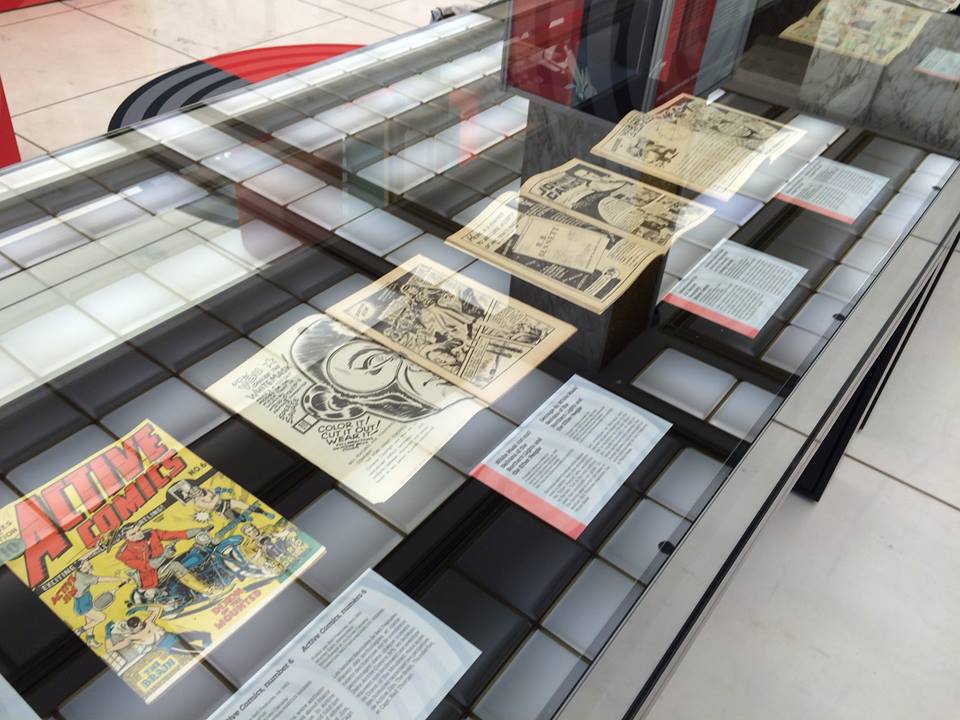
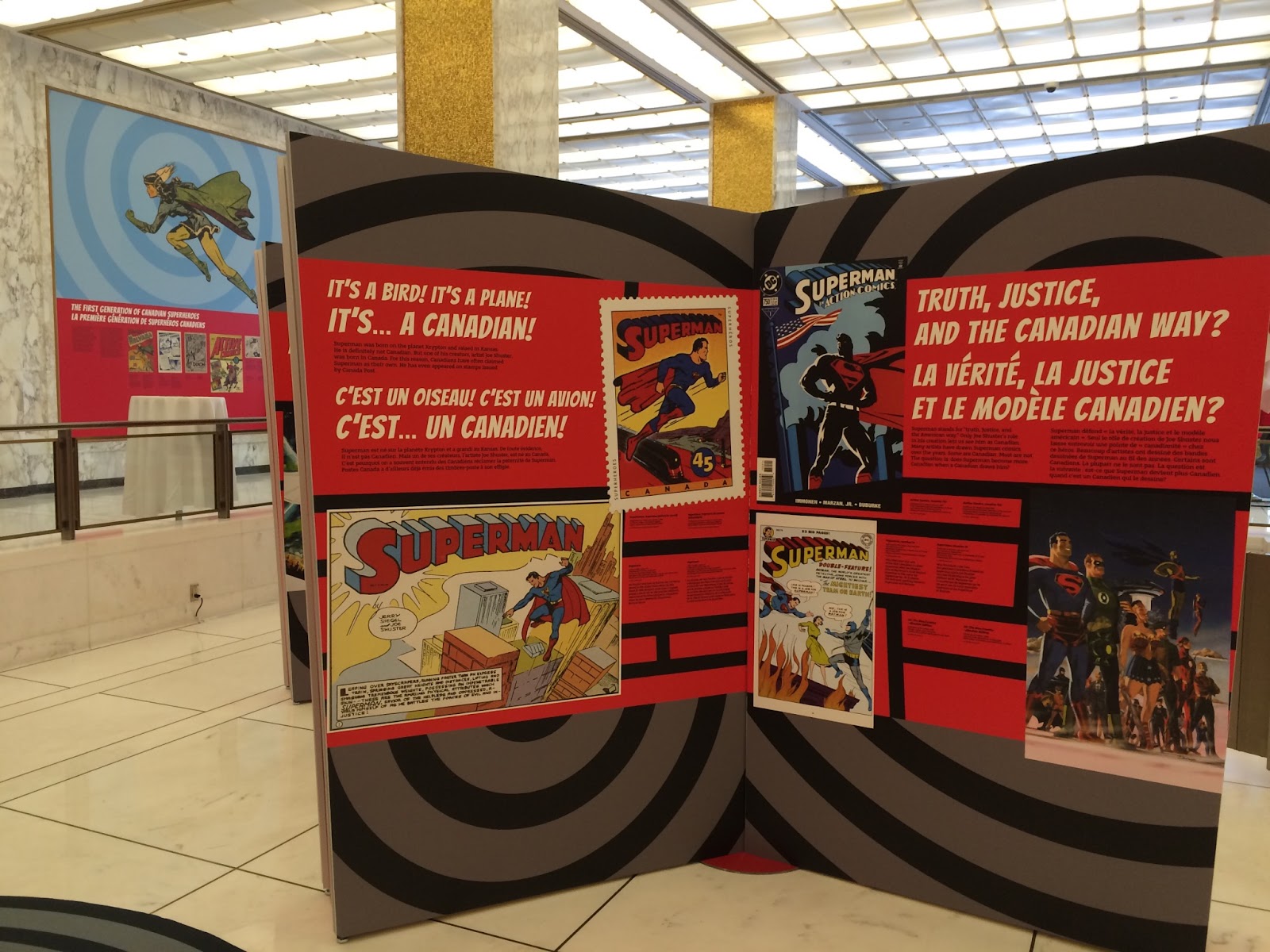
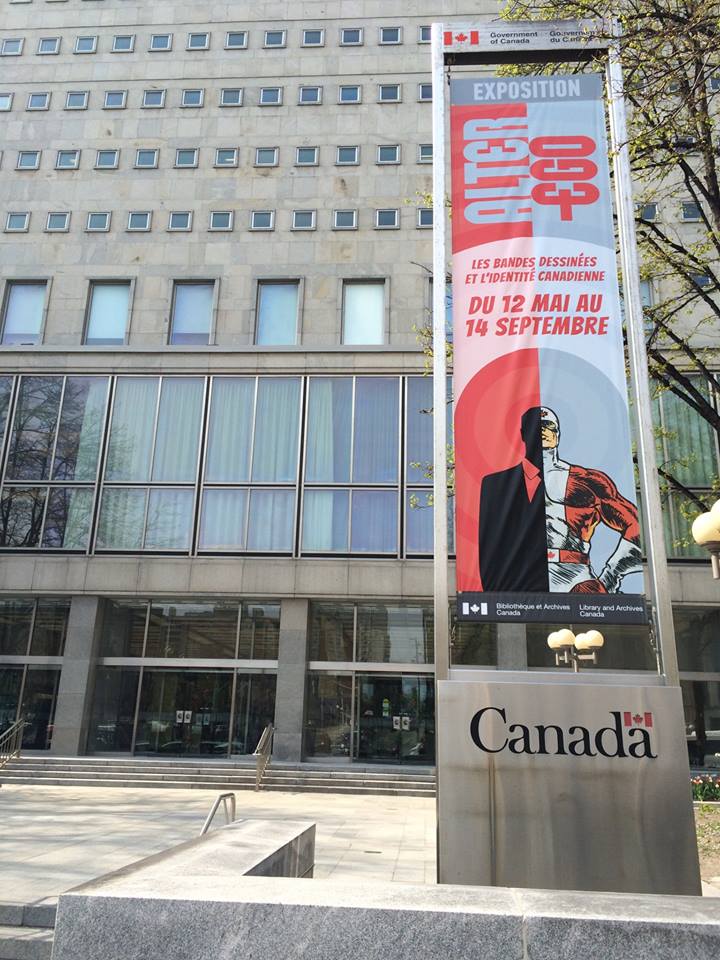
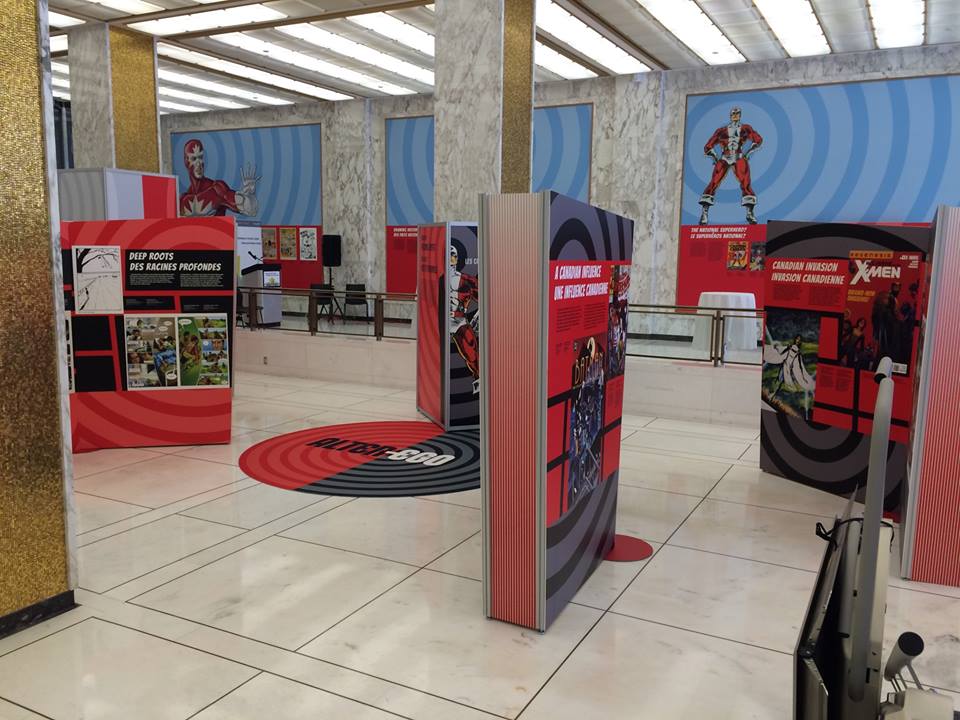
      To begin, I would like to share with you the comic book related project which I collaborated on, entitled Alter-Ego. Library and Archives Canada (LAC) is currently hosting this exhibition, which showcases Canadian related content, contributions and creators throughout the history of comics. The exhibition features reproductions of art by Canadian artists such as Adrian Dingle, Bryan Lee O’Malley, Darwyn Cooke, and John Byrne.


      This project initially arrived in our department during my first month in the Copyright department, and had been assigned to one of my colleagues. I immediately requested this assigned, even though my manager believed it may be too difficult for someone who just started at this job. My response to her was ‘’I will have to learn how to do these types of projects eventually, might as well learn doing one on a subject I love’’. I was assigned to the project that same day.


            This project proved not only to be a great learning experience in terms of copyright, but gave me the opportunity to meet many great people in the field of comic books as well. While contacting copyright owners, I got to talk to Richard Comely, creator of Captain Canuck. During the grand opening of the exhibit, I met Mark Shainblum, creator of Northguard and Jay Odjick, creator of Kagagi. My inner fanboy went nuts when my responsibilities required me to contact the larger american comic book companies such as DC, Marvel and Image. My interactions with all of them has given me valuable insight into the world of comic book publishing.


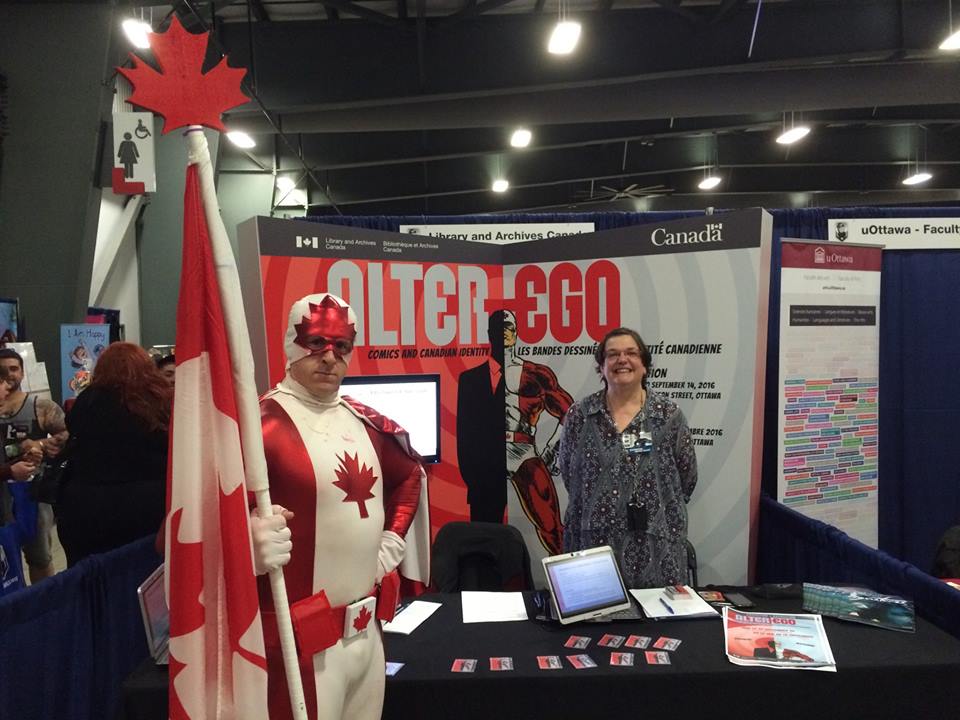
              In order to help promote this exhibition, LAC set up a booth at this year's Ottawa Comiccon. I had the pleasure of working two of the three days at the event, and had a great time doing so. It was really busy, so I did not manage to take as many pictures as I would have liked, but we did succeed in generating interest for our exhibit. Plus we had to opportunity to meet a lot of interesting people, like this fellow who was kind enough to pose in front of our booth.


Now on to my other projects.


The only work I have done this month in regards to Missing Worlds Media, was review other peoples content. I am currently still waiting on feedback from higher management regarding the Heroic and Villainous paths I have submitted, and if they need changes. Speaking of missions, missing Worlds Media recently shared details about about how missions will operate in the game.


             So in terms of my own book, I have made progress on a few things. My decision to slow down my blogging has helped a bit, but my job, responsibilities and now camping season seem to be eating a lot of my time. So recently I decided to try something new: finding time everyday to write at least one paragraph. It might not sound like a lot, but one small paragraph is better than no progress at all, which sadly was the case for many days.


            This new goal allowed me to fill in several more chapters on my timeline spreadsheet.  This is important, as adding details to the timeline will help me envision the direction my story needs to go in.


Also this past month, I am nearing completion of my first antagonist character, who will go by the name Ivan Maddox. He will be playing the role of an intimidating henchman in the service of the main arch-villain. All of his background details have been filled out, and I have almost completed his personal history. Hopefully it will be done by the end of the month.


One last note before wrapping up this update, I wanted to share the websites of just a few of the artists I had the honor of interacting with while working on the comic book exhibit.


That is all I have to report for this month. I want to thank everyone for taking the time to visit my blog, it is truly appreciated. Also, a special thank you to my colleagues at Library and Archives Canada, for the privilege of working on the Alter-Ego project and the Comiccon booth, I had a great time.


Until next time.


Cheer,

            Patrick Osborne


***all photos in this article are ©Patrick Osborne 2016***

Friday, May 27, 2016

BOOTCAMP LESSON 13: Improvisation


Welcome back!


    I have a little something different planned for today’s Boot Camp exercise, as it  was inspired by last month’s writing article on comedy.


During my research, a point that was mentioned on multiple occasions was that a writer must be able to be spontaneous and improvise. Though this is an easy concept to understand, putting it into practice is another matter entirely.


In order to practice our ability to extemporize, I came up with an exercise that has several randomized components. Having to deal with elements we have no control over will force us to find a way to make these elements work together.


BOOTCAMP LESSON 13: Improvisation


The basics of a story is a plotline which follows the exploits of the main characters as they attempt to resolve a conflict while making their way to their intended goal. When we write a story, it is our job to come up with these elements. In the following exercise, however, you will have to create a short story using various elements chosen at random.


You will need a six-sided dice for the purpose of this exercise. If you don’t have any handy, you can use an online dice program such as this one: http://www.roll-dice-online.com/


So, here are today's guidelines!


  1. Below are six main character candidates. Roll the dice and use the character with the number corresponding to your result.
  2. Next are six stylized worlds/environments. Roll the dice and use the setting with the number corresponding to your result
  3. Next are six sidekicks. Roll the dice and use the character with the number corresponding to your result
  4. Next are six obstacles. Roll the dice and use the obstacle with the number corresponding to your result
  5. Next are six goals. Roll the dice and use the goal with the number corresponding to your result
  6. Write a short story using all of the components you acquired. There is no limit to this exercise.
  7. Within the short story you will write, the components you acquired may be modified to fit each other, BUT must remain true to their original designs as much as possible.


Main Characters
  1. Sherlock Holmes
  2. Robin Hood
  3. The Tin Man
  4. Red Riding Hood
  5. King Arthur
  6. Cleopatra


Settings
  1. Post Apocalyptic Wasteland: For one reason or another, the world has gone through a terrible change. Civilization as we know it no longer exists, and those who managed to stay alive must now scavenge for supplies and fight other survivors for resources.
  2. Police crime scene: Detectives, SWAT teams, Bomb Squads, Computer Crimes Division, Police Precincts, Forensics, etc. Law enforcement attempts to put a stop to illegal activity or investigating mysteries by tracking down  various sources or suspects.
  3. Superhero battle in downtown metropolitan: Superheroes strive to uphold justice and bring balance to society. Unlike the normal police force, superheroes have strange powers to assist them in dealing with super criminals that are a threat on a global scale.
  4. Retro Sci-fi Spaceship: Retro Sci-fi can be described as the future as seen from the past, or the past as seen from the future. Influenced by the scientific, technological, and social awareness of the present, this world reflects the best humanity can hope for.
  5. Deserted Island: Being stranded on a deserted island, the character must to live off the land by finding food, water and shelter. Characters may also be forced to deal with isolation, or else face possible insanity.
  6. Coffee Shop: An everyday coffee shop, filled with people enjoying their drinks or working on their laptops.


Sidekicks
  1. A priest
  2. A mime
  3. A ''D-list'' Super Hero
  4. A bearded hipster
  5. A Cosplayer dressed as a random Anime Character
  6. An Alien


Obstacles
  1. A pack of ravenous badgers
  2. A zombie horde
  3. A flood
  4. A stampede of angry, Emo teenagers
  5. An axe wielding serial killer
  6. A flock of flying monkeys


Goals
  1. To save the world
  2. To save the girl/guy/significant other
  3. To save themselves
  4. To prevent corruption of society
  5. For the LOLz
  6. Profit!


For those who aren’t afraid to share their entries, feel free to submit them in a private message to me via facebook, and I will post them here. Remember, this is a game, so no posting bad comments about other people's entries. Now pardon me while I go write a story about Sherlock Holmes and his Mime sidekick, as they try to survive a zombie apocalypse in a dystopian future… for the LOLZ.


Now go! Create! And most importantly, have fun!


Until Next time!


Cheers,


Patrick Osborne

Friday, May 20, 2016

Interview - Gint Aras


Welcome back!


This month we have an interview with published writer, Gint Aras. I met Mister Aras via Facebook, and he gladly volunteered to answer some of my questions.


After reading through this interview, I find that he is down to earth, open minded and philosophical. I found his perspective to be thought provoking, which he shares in the following interview.


Now on to the interview!


Short Bio: Gint Aras (Karolis Gintaras Žukauskas) lives in Oak Park, Illinois with his family. He's a community college instructor, photographer, and has worked as an editor, columnist, interpreter and translator. His prose has appeared in such places as The St. Petersburg Review, Quarterly West, Antique Children, The Good Men Project and others.


Published Works:
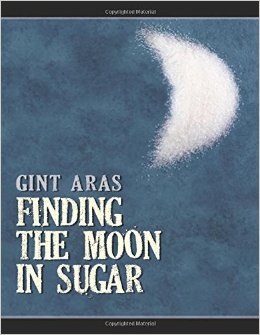
  • Finding the Moon in Sugar, novel (Infinity, 2009);
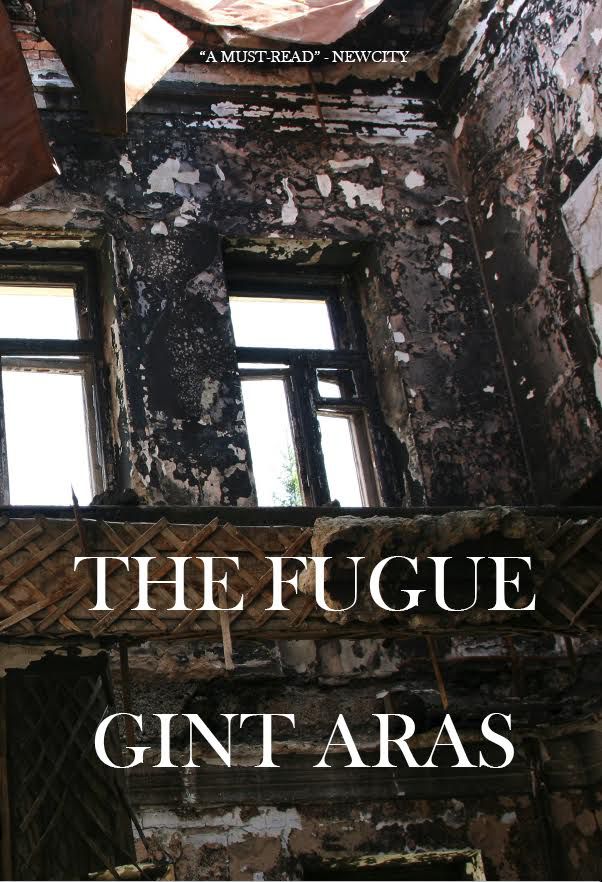
  • The Fugue, novel (Tortoise Books, 2016)


Current Projects: I’m currently marketing my novel, The Fugue, while working on a book of non-fiction that deals with income inequality and perceptions of ethnic and racial identity.


When did you begin writing?


Before I could. My grandfather told me I used to write him stories long before I knew the alphabet or even had the motor skills to shape letters. I have a vivid memory of sitting on the top stair of the back stairway and “writing” a series of squiggles and lines I called “stories”. I’d bring them to my grandfather and he would “read” them to me. I must be three years old in the memory. I was in grammar school when I knew for certain I wanted to write books —novels— and tell stories. From that time on, there was never anything else that I wanted with as much passion or energy. I still have a 200-page manuscript typed when I was 12 and 13 years old, and I wrote two other manuscripts in high school. Obviously, they’re not fit for public display. But they helped me learn craft and cultivate the necessary patience.


Did you receive any special training or attend a school?


I had a Catholic education. It had its drawbacks, but one strength of that traditional form of schooling was an emphasis on literacy and—at least by comparison to what’s happening in schools today—an effective approach to reading. By that I mean developing historical and cultural context, bringing it to the reading material, and then looking at novels as attempts to affect the reader, even to make it impossible for the reader to think the way s/he used to before reading the book. I did not consider that special training until I started teaching college classes myself, but now I feel enormous gratitude to those teachers. I loved college and got a lot out of it. I was fortunate to have people who taught me to connect the dots, to see how a writer doesn’t study writing to be a writer. A writer studies everything to be a writer, remains mindful of perceptions, learns to listen, to see the interrelations between all subjects, all people. I also have an MFA from Columbia University. I owe so much to that program. It accelerated my development, especially in craft and attention to language, and I learned to trust ideas and judge their value. It really matured me.


Where do you get your inspiration from?


I honestly think inspiration is a myth, at best a romantic story. I believe Marcel Proust when he writes, “My destination is no longer a place, rather a new way of seeing.” To gain a story, you need to work at pointing your attention, waking up and seeing. I’m an abuse survivor, and I grew up in an alcoholic community. That experience creates a lot of confusion and doubt. I used to hide in my room and write to escape my reality while I could create a fictitious one where I had complete control. Now I write for a different reason. It’s hard to articulate, but I feel I’m creating characters to express the tragedy we become when we desire control and try to escape. I write to release energy, to share, but also to provoke. I know most people these days want to escape the world we’ve built for ourselves, and they feel trapped because there’s no alternative world, nowhere else to go. Of course, we’re the ones creating it. I’ve learned that my job is to acquire new ways of seeing. So I consume a lot of art. I listen to conversations on the train. I read books written by people outside my culture, outside the languages I speak. I travel. I practice Zen and meditate. When it comes to subject matter or topics, I try to write the thing I would really like to be reading. Words and ideas don’t come in a flash. I also often hear sentences crafting themselves in my mind. I’ll be riding the bus, and I’ll be thinking of an opening line to something,
reworking it in my head. Great writing can happen when all you’re doing is observing what someone else might consider ordinary. So much depends upon a red wheelbarrow glazed with rain water beside the white chickens. I believe that. It’s more important to say clearly what you see than it is to find inspiration. Another way of saying it: inspiration isn’t lofty. Great writing can be about a common farm tool.


Do you use any special resources when writing? (other books, computer programs, etc)

This is not to undermine the question. I understand it’s about technology, but my process is really decluttered. I have a set of handmade mugs…they were made by pottery students studying at the college where I work. I like to have a cup of strong black coffee and some electronica, trip hop or really flowing classical music playing softly in the background. I like indirect light. I’ll often light incense, and in the winter I’ll have candles. I use paper dictionaries. A lot. I have four different ones in my office at home. They’re old, stained with coffee, dog-eared. I still journal in a bound notebook. And I love using fountain pens.


What is (in your opinion) the most important thing to remember when writing, and why is it so important?


You need to take care of yourself. You need to love and respect yourself, be good to yourself, get exercise, eat well, have good sex, surround yourself with beauty and find some way to support yourself. Writers are fed this narrative that they need to be masochists, endure all this “tough life” crap. People say we need to feel sorry for ourselves because we’ve chosen this writing identity that will never lead to the kinds of riches enjoyed by hedge fund managers or college presidents. If you’re writing, you’re going to be rejected. A lot. I don’t care who you are—rejection takes its toll. It can really get you to stop caring for yourself properly, and then it’ll affect your health. Do something nice for yourself every day.


What is (in your opinion) the most challenging part of writing, and how do you overcome it?


I think the rejection is the hardest. It’s harder to face rejection than the confusion peers have about a writer’s life choices. Rejection is just part of writing, like a mechanic’s greasy hands or a teacher’s anxiety. I don’t know if you overcome it. You either live with it or you stop writing, and you keep writing not because you want to overcome rejection but because you have something to say. In the end, hearing that someone doesn’t want my stories is easier than learning a colleague has been shot, as police do, or to know there’s no cure for someone, as doctors do. Honestly, being a writer is easier than being a teacher, father and husband, and I’m all three. You have to keep things in perspective.


Did you use an agent? (why or why not?)


Not for The Fugue, my most recent novel. The story of how that book got published is long and complicated; people can read about it here if they're interested. I had given up on that book after trying to sell it for years, so I honestly didn’t think any agent wanted it. I have an agent now and I hope to have success with a proposal I’m working on.


Did you use an Editor? If not, what process did you use to edit your work?


The Fugue has had two different publishers in less than four months. Both publishers had their editing process. Everyone needs an editor. You’re not going to be able to clean up your own writing without a second or third set of eyes. And a skilled editor knows the difference between managing a text and polishing it, letting it be itself in the sun. The best ones polish. The worst ones manage. I’m fortunate to have a great editor at Tortoise Books.


How did you get your book published? (self-published, Vanity publishing, Mainstream publisher).


I’m with an indie press, Tortoise Books. They picked up The Fugue after CCLaP (the Chicago Center for Literature and Photography) suffered a setback and let it go. Thankfully, I had been on Tortoise’s radar for a while, and they were able to offer me a deal I’m really happy with. I’m fortunate to have such good people behind me.


Do you handle your own marketing?


I’m very pleased with the staff and resources available at Tortoise. They’re really savvy about marketing. Of course, I do a lot of my own marketing, send out press releases, set up readings, maintain an online presence.


What is your best marketing tip?


Be thankful to the people who are interested in your stuff. Do you have any advice for other writers? Only that it’s important to read a wide variety of books. I think a lot of people end up in echo chambers these days, and you need to take steps to make sure you’re not in one. The best way is to read.


In closing, I would like to thank Gint Aras for taking the time out of his busy schedule to take this interview, his knowledge, experience and insight are truly appreciated. Hoping everyone found it as helpful and informative as I did. I wish him well in his future endeavors.


Until Next time,


Cheers,

            Patrick Osborne
Tuesday, May 17, 2016

Inspiration part 12 - Parents


Welcome back!


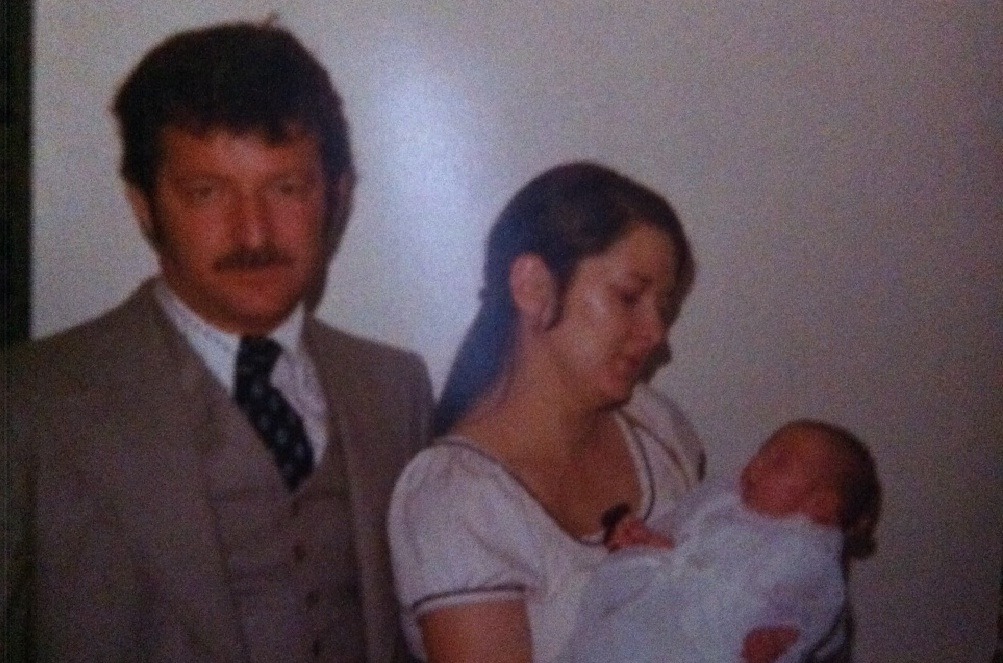
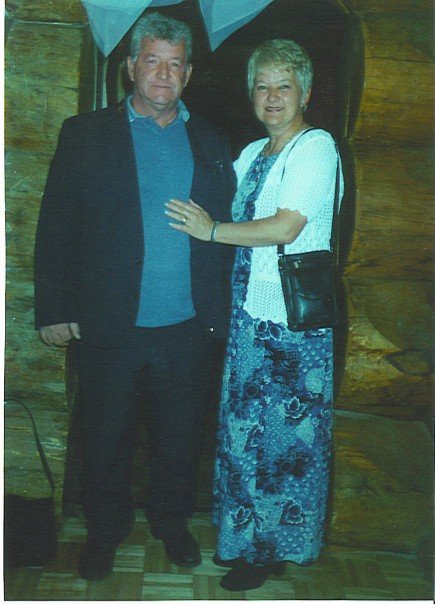
I had no overall theme planned for May, so while trying to think of what to discuss in this inspiration post, I got an idea from one of  this month's holidays; Mother’s Day. So I decided to share with you all the source of my artistic talents and interests, my parents.


Parents play an important role in all of our lives. They supply us with the building blocks from which we assemble ourselves, be it from a mental, emotional or genetic standpoint. We are defined by their actions, choices and lifestyles. Your origin is the result of their encounter, and whether you get along with them or not, you are part of them as much as they are part of you.


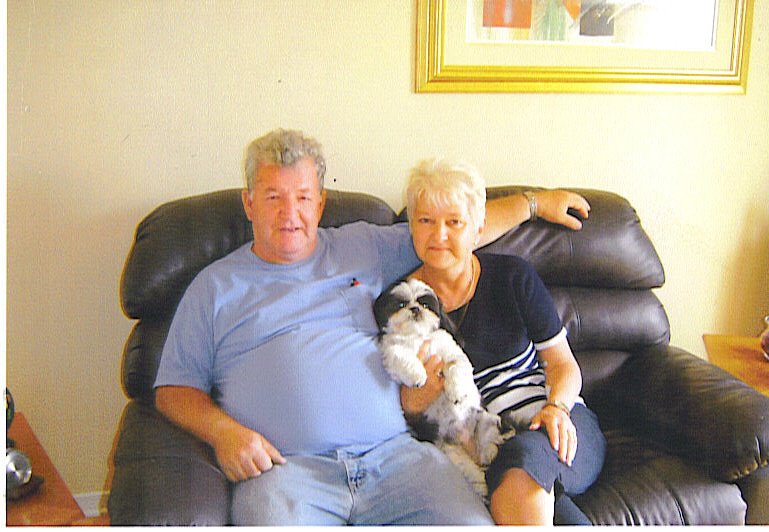
My parents and me.


    So what role can parents play in terms of storytelling? There are two ways to answer this question; the first is as being part of the story, the second is as influencing the story.


    As being part of the story, parents can have a direct or indirect role. What I mean by indirectly, is that parents may affect the story by not even taking part in it. Parents are such a big part of our lives, than their absence can be just as influential as their presence. Without them, characters suffer a loss, and are forced to take responsibility and continue on their own. We see this often in Disney movies, where the loss of a parent (mostly the mother) motivates the main character to move on or react in some way.


As for directly, parents have often been seen playing important roles in storylines. As main protagonists, parents (or parental like figures)  can make good heroes, as trying to perform their parental duties can be good character motivation. Here are a few good examples:
  • Sarah Connor from the Terminator franchise, whose main objective was to protect her son and prevent a future holocaust.
  • Ripley from the original Aliens movie, who risks her life to save the young girl, Newt.
  • The unnamed father from the book The Road, who spends the length of the story protecting his son in a post-apocalyptic world.


In some stories, the Protagonist needs some form of assistance in order to achieve their goal. In these situations, parents can come in various incarnations, such as mentor, protector or emotional support. Here are a few good examples:
  • Baloo the bear and Bagheera the panther from The Jungle Book, who act as adoptive parents to the human child, Mowgli, and teach him how to survive in the wild.
  • Mr. Levenstein from the American Pie movies, who tries to give his son, Jim, helpful advice, though often in an awkward and comedic manner.
  • The Weasley’s from the Harry Potter series, who take in Harry after he leaves the residence of his abusive aunt and uncle.


Parents playing the role of the antagonist can have a particularly strong impact on a story. Placing the protagonist in a confrontation with a parental figure creates a scenario that can be highly volatile and emotional scarring. Here are a few popular examples:
  • In the classic tale of Cinderella, the evil stepmother forces Cinderella to work and prevents her from leaving the house.
  • Doctor Crane, a serial killer posing as a dentist and loving father in the novel Deeper than the Dead.
  • Darth Vader, the tragic villain from the Star Wars franchise, attempts to convert his son, Luke Skywalker, to the dark side of the Force.


Finally, we have parents that affect literature by inspiring the writer. As mentioned above, parents play a large role in who we are since they raised us to act and think like them. Their views and opinions will affect who you are, and will inevitably be translated in how you write as well. In my case, my mother was the loving, artistic type, whereas my father was the down-to-earth, opinionated type. The end result (me) was someone who was passionate about his views, which becomes apparent in my conversations or my writing.


My tastes for literature may differ greatly from my Mom and Dad’s, but in the end, I can still see them in everything I do. They played a big part in my life, and I wouldn’t have it any other way.    


    Thank you all for stopping by, your continued support is truly appreciated. I hope this article has helped you in some way.


    Until next time.


    Cheers,


    Patrick Osborne

**In loving memory of Henriette (Lamoureux) Osborne -- 1948-2006**