Welcome to my blog!

Welcome to my blog! This is my journey, my first steps into the world of fictional writing. This blog is an online journal of sorts, where I share the progress of my work as well as what I have learned along the way. I hope you enjoy your time with me and that my experience may be of some use to you.
Showing posts with label Writing article. Show all posts

Monday, October 16, 2017

Thrillers and Suspense

Welcome back!


Inspired by Halloween, I decided to focus this month's writing article on a genre that specializes in thrills, chills and spills! We will be discussing Thrillers and Suspense as a genre in fiction.
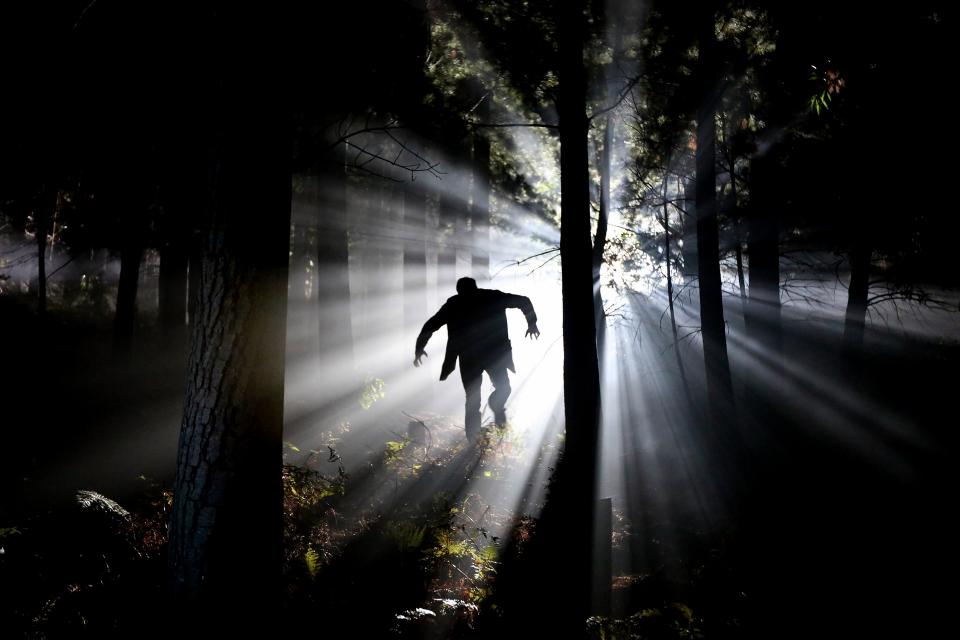

dark night light trees plant forest fear man running people alone silhouette


The basics of a story is a plotline which follows the exploits of the main characters as they attempt to resolve a conflict while making their way to their intended goal. So how exactly does Thriller and Suspense differ from other genres? Suspense in fiction happens when dramatic tension escalates, and becomes charged with anticipation. So the genre isn’t necessarily about plot as much as it is about emotion, defined by using tension to create anxiety, uncertainty, or surprise. So it is easy to see how this can cause confusion, as these characteristics are applicable to a broad range of literary genres. Thriller/Suspense can stand on its own, but can also be incorporated into other genres, such as crime/thriller, western/thriller, fantasy/thriller, horror/thriller, and many more.


It is a very popular genre in writing, however it’s classification seems to elude many. They tend to get scattered around with other genres, being categorized as Horror, Science Fiction or even Mystery.


To understand Thriller/Suspense fiction, you need to understand it’s perspective. The storytelling approach when dealing with a crisis focuses on being proactive, with a hefty dose of drama. In order to be proactive, events need to happen in the beginning of the story, forcing the protagonist to react. To better understand, let us have a comparison:


  • Mystery: A crime happens, then we see the protagonist spend the rest of the story trying to find out what happened. He is therefore reactive.
  • Horror: Unspeakable terror happens, then we see the protagonist spend the rest of the story trying to escape it. He is therefore reactive.
  • Science-Fiction: Something out of the ordinary happens, then we see the protagonist spend the rest of the story dealing with the situation. He is therefore reactive.
  • Thriller/Suspense: The protagonist receives information about impending doom, then we see him spend the rest of the story attempting to prevent it. He is therefore proactive.
 
Image result for public domain reaper


The key to writing Thrillers/Suspense fiction is not to ask “What needs to happen?”, it’s to ask “What can go wrong?”. Four factors need to be taken into account when writing this genre: reader empathy, reader concern, impending danger and escalating tension. So the tension in the story needs to escalate, or else the suspense will evaporate before it reaches a climax.


Here are some important points to remember when writing Suspense Fiction:


  • Create a good hero. This may be true to any story, but the suspense hero has to be someone the reader will worry about. In Suspense, the hero helps create tension by having their life, needs or desires in jeopardy. We push suspense even further by keeping said aspects away from the protagonist, emphasizing how deeply the character wants it, and showing what consequences will result if they don’t get it.
  • Create a good villain. In a suspense novel, the identity of the antagonist is known early, and they are very visible to the audience. It is therefore important that the villain be a worthy opponent to the hero. Explore who the antagonist is; what is their motivations, background and character. Show the reader why they should fear this person.
  • Understand tragedy. It is important to understand the importance of loss. The goal of Suspense stories is to engage the reader's concern by heightening the impact of the tragedy. But if the story contains hundreds of murders, each explained in detail, then the act of murder will seem less tragic, and readers won’t feel concerned by it. To build tension, don’t emphasize the violent act, increase the reader's apprehension about the violent act.
  • Modulate Suspense. Building tension takes time. Suspense happens in the stillness of your story, in the gaps between the action sequences. Create a feeling of apprehension by slowing down time; use longer, more complex sentences rather than being short and to the point. This can help to increase suspense. Break the tension by inserting a pause into suspense; a moment of comic relief, reveal a clue that advances the plot or maybe character development. Use this technique of inserting a brief respite to give readers a break, then return to the suspense to keep them hooked.

  • Promises and Payoffs. A promise is anticipation that a dreadful event is going to happen; the payoff is the action taken against said event. There can be a suspense sequence early in the novel, and the tension should build up the farther into the story the reader gets. The bigger the promise, the bigger the payoff. It’s important, however, that those promises always be fulfilled, or else the readers will end up feeling disappointed.

  • Create dilemmas. Events in the storyline should come at a price. The protagonist needs challenging dilemmas to test their character, and must seemingly be a lose-lose situation. By their nature, protagonists can’t stray from their morals or promises, so they will need to face dilemmas, no matter how difficult.
  • High stakes. The story must be about a cause so important to the protagonist, that they are willing to do anything to prevent it from being in danger. Place said cause in some sort of peril, then raise the stakes by making the danger more imminent, intimate, personal and devastating. Postponing the resolution will help sustain the suspense, and ensures readers will empathize with the protagonist.
  • Apply pressure. A key way for writers to create tension is by pitting the protagonist against what seems to be insurmountable odds. Pile on the problems by giving the protagonist more things to do than they can handle; working against the clock, waves of enemies, elemental disasters, allies in distress, unexpected obstacles, etc. Push them further by removing their tools, escape routes and support system. The protagonist should be working every minute to achieve their goal, which should feel just out of reach. Heroes should be stretched to the breaking point in order to save the day.
  • Foreshadow rather than telegraph. The line between foreshadowing and telegraphing is a subtle one. Creating a scene that ends in foreshadow is meant to hint at something more sinister to come without out giving away the punchline. Telegraphing is when the reader guesses what’s coming, effectively ruining the suspense.

  • Point of view. The reader should have foresight into the actions of both the protagonist and the antagonist. By making the readers aware of the trouble before the protagonist, they get to see the lines of convergence between the protagonist and antagonist. This technique builds tension from the reader’s self-imposed fears of knowing the consequences of the perils ahead.
  • Turn up the Sensory Detail. Heighten anticipation by focusing on the right sensory detail. By making your character hyper-aware of sensations, you add a feeling of impending danger, which contributes to dramatic tension. The absence of sensory detail, such as stillness and shadows, can also suggest a hidden menace. Furthermore, using the protagonists internal dialogue allows the reader to experience the tension firsthand.


street road trees plant nature people black hoodie jacket walking dark fog creepy


In closing, the most important thing I learned today, is to be unpredictable. Make nothing straight-forward. Readers will try to predict what will happen, but they want to be wrong. The reader might know what the story’s endgame is, but not how it’s going to get there. Give them more than what they are anticipating.


Until next time!


Cheers,


Patrick Osborne

Tuesday, May 23, 2017

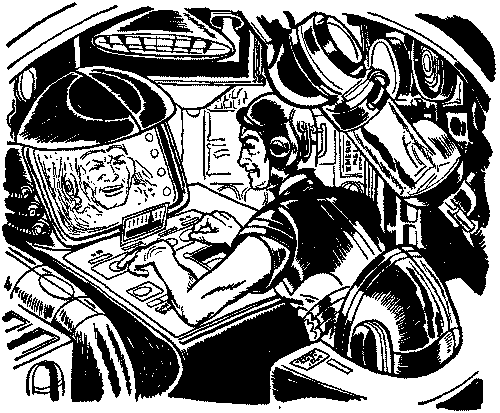
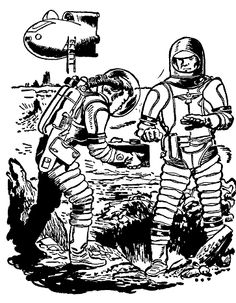
Science Fiction

Welcome back!


In honor of Star Wars Day (May the 4th), I thought it would be a good idea to have the theme for this month’s article be about writing Science Fiction. Some people may disagree about this popular franchise being Sci-Fi and think it is more of a fantasy or drama. To be honest, after doing the research I am inclined to agree. Let us explore the details of what makes a story Science Fiction further.


Image result for public domain science fictionImage result for public domain science fiction


The basics of a story is a plotline which follows the exploits of the main characters as they attempt to resolve a conflict while making their way to their intended goal. So how exactly does Sci-Fi differ from other genres? Science Fiction (also referred to as ‘’speculative fiction’’) is just that, fiction about science. At its core, science fiction is about people dealing with situations that are out of the ordinary for the audience. The protagonist will experience encounters or events that focus on scientific discovery and human innovations. Its stories contains elements which are based on modern scientific facts or ideals, but that are expanded to unforeseen or even improbable levels.


While writing science fiction, the goal is to create the worlds and societies of tomorrow by exaggerating the facts of the present day. To explore possibilities and human nature through exposure to subjects, situations or scenarios that are otherwise impossible or unlikely to happen. This can be incredibly tricky, but luckily, there are some simple guidelines to help authors along.


RULE 1: DO SOME RESEARCH
There are as many different types of Sci-Fi as there are scientific fields; political, psychological, social, technological, etc. Details are what sell science fiction, so the more research you do into a selected field, the more confident you will feel and the more ideas will come to you.


It is not necessary to study to a point where you earn a Phd, but it would be helpful to acquire an understanding of scientific elements, a grasp of scientifically established facts and knowledge of how to feed this information to the audience (for more details on how to control the flow of information, see my post showing and telling).


RULE 2: FORM AN IDEA
The basics of creating science fiction stories revolve around addressing a modern day scientific aspect, then asking the ever popular ‘what if..?’. There are two different approaches to this query: prediction or speculation.


Prediction is when fiction is created by extrapolation. By taking what is currently known to science, the author then guesses as to how it will change over time. This can focus on anything from various technologies, to social trends or even climate changes. When trying to predict the evolution of a science, event or practice, look for documentation on a similar situation from the past, as it could help extrapolate results. For example, for writing a story about aliens colonising on earth, maybe read books on how the Europeans colonized America.


Speculation is when an author adds elements based on theories or concepts that have no firm evidence of their probability or their existence. Intelligent alien life, faster than light travel or teleportation are classic examples of speculation in science fiction. Researching for this approach can be tricky, as it requires some level of ingenuity. For example, no clear documentation exists on intelligent alien lifeforms, so for creating an imaginary race from scratch, research other lifeforms that are documented and have uncommon attributes; natural camouflage, regenerative abilities, extra limbs, etc.


Here are a few popular examples for ideas using these approaches:
  • What if artificial intelligence became sentient?
  • What if intelligent alien life landed on earth?
  • What if social media eliminated all need for physical interaction?
  • What if pollution caused an unforeseen global natural disaster?
  • What if dinosaurs still existed?


RULE 3: PUSH
Once you have your central idea, it’s time to ignore the limitations of modern day science and push said idea past any known boundaries, achieving the characteristic feel of Sci-Fi. Imagine how your concept would impact your society and setting, and what changes occur because of them say five, ten, even a hundred years down the road.


The challenge with science fiction, however, is to keep the science plausible, and not push it so far as it becomes unrealistic (even by fiction standards). It is best to keep your ideas clear and straightforward. Of course stories often contain several plots and themes unfolding simultaneously, so try to link most details from the setting or characters back to your central idea, this will help minimize inconsistencies and long winded explanations (also known as the dreaded ‘’infodumps’’).


In closing, the most important thing I learned today, is that science fiction requires the writer to look at things differently, to think outside the box and not to be afraid to push the limits. Research is also very important, as it will make your stories more compelling.


Until next time!


Cheers,


Patrick Osborne
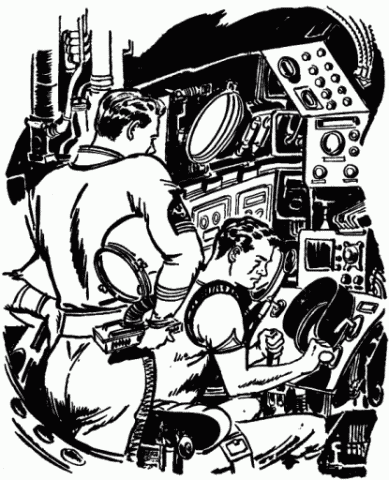
Image result for public domain science fictionImage result for public domain science fictionImage result for public domain science fictionImage result for public domain science fictionImage result for public domain science fictionImage result for public domain science fictionImage result for public domain science fictionImage result for public domain science fiction**All images in this post are considered public domain under the Creative Commons law (CC0)**

Friday, February 10, 2017

Love Interest characters


Welcome back,


In the spirit of Valentine’s Day, I thought I’d explore a popular but sometimes difficult to master story component: the love interest. I’m looking forward to learning a lot on this subject, as I am currently working on my own story’s love interest.


Image result for public domain images love


The basics of a story is a plotline which follows the exploits of the main characters as they attempt to resolve a conflict while making their way to their intended goal. So how exactly does a love interest play into this equation?


In order to want to face adversity and move the story forward, characters need a reason, a purpose. Though inspiration can come in many forms, feelings such as adoration, affection, happiness, or love can be powerful motivators which can drive characters. The love interest is a tool that serves to personify these elements, and can be anything from sidekicks, to mentors, to support systems, or the story's main source of conflict.


Love plays a big role in everyone lives, and the same applies to fiction. It doesn’t have to be central to the storyline, but a little romance can add to the character development or depth to the conflict. Here are a few roles a love interest can play in a story.


Source of Conflict : Conflict is an essential element of a storyline, responsible for motivating the Characters to take action. In terms of storytelling, a relationship with no conflict tends to be the end goal and not the main plot. Relationship conflicts must be relevant to the overall story, be they the center of the plot or not. Here are a few examples of how a love interest can be a source of conflict in a story:
  • Abusive Partner: A person who is violent or domineering towards their partner. Occasionally portrayed as the antagonist, this role helps define what constitutes a negative relationship, which in turn serves as a contrast for what the protagonist should be looking for, a healthy relationship.
  • Forbidden Love: Normally used to describe the relationship between characters who are in love, but for some reason are not allowed to be together. Reasons could be because they are in different factions that are at war (Romeo and Juliet), are from different social backgrounds (Pride and Prejudice), or have opposing major defining character traits (a Hero dating a Villain).
  • Love Rivalry: Also referred to as a Love Triangle, this is a situation where two (or more) characters are competing for the affections of a single person. The love interest usually find themselves conflicted, having a hard time choosing between their admirers. A  contemporary example is the Edward-Bella-Jacob triangle from the Twilight series.


Source of Catalyst: Love can be a powerful motivator. A love interest can occasionally act as a catalyst in the storyline. They can set events into motion, either by their own volition, by accident, or simply by being present. Here are a few examples of how a love interest can be a catalyst in a story:
  • Broken Wing: A love Interests who is emotionally scarred and has a history of tragedy or heartbreak. Protagonists would feel inclined to help these types of love interests by solving whatever problem ails them.
  • Damsel in Distress‏‎: The Damsel in Distress is a time honored plot tool where the love interest is repeatedly placed in some form of danger, forcing the protagonist into action.  Though effective, this has been so overused that it can be considered a lazy excuse for a plot.
  • Dead Love Interest: A love interest that dies, then becomes a catalyst for the protagonist. Depending on how they died, they can be a reason for the main character to question their lives, motivation to go on a quest or seek retaliation for their death.


Source of Development: How a protagonist deals with love and relationships can help better define them to the audience. Love interests can be a great source of character development, filling in gaps that the normal storyline would not cover. Here are a few examples of how a love interest can further character development in a story:
  • Childhood Friend: A Love Interest that has been friends with the main character since they were kids. This gives the writer a source of knowledge dating back to the protagonist's childhood, making it easier to reveal this information to the audience.
  • The Ex: Having a former partner make an appearance in a story forces a character to deal with certain situations, be they unpleasant or not. This is a great tool for revealing past information on a character that may not otherwise be related to the main story.
  • Long Lost Lover‏‎: Love interests don't always have to physically appear in the storyline to have an impact on the protagonist. Exploring past relationships through memories or flashbacks can help reveal vital information on the main characters.


Source of Influence: Love can change us, mold us, make us grow. In a story, we see the journey of the main character as they undergo through some form of change along the way. The love interest character should influence the protagonist to grow with regards to who they will become by the end of the story. Here are a few examples of how a love interest can influence the story:
  • The Clueless: Being guilty of this one myself, this is when a character is totally unaware of the feelings for them from another character. If the clueless character happens to be the protagonist, then the audience would get to see how the protagonists’ view of the love interest character changes from beginning to end.
  • False Lead: Refers to a love interest that has potential, but is only present in the story to dupe the main character. The False Lead serves as an obstacle between the protagonist and the one true love interest, leading them astray from their goals.
  • The Supporter: A Love Interest that encourages a character. These love interests have a nurturing, positive influence on the protagonist. They help other characters by offering advice, support or assistance when facing an obstacle.


Image result for public domain cupid


Romance is not an easy genre to master, but I learned a lot today, and I look forward to applying this information to my own stories. Until next time, and have a happy St-Valentine's day!


Cheers,

            Patrick Osborne